P1 Beginner Paragliding Course in Kamshet
First Solo Flight • 3 days • Beginner
This Paragliding course is an initiation, a discovery, your very first step in the sky and into the magical world of free flight. In just 3 days, you'll experience your First Solo Flight.
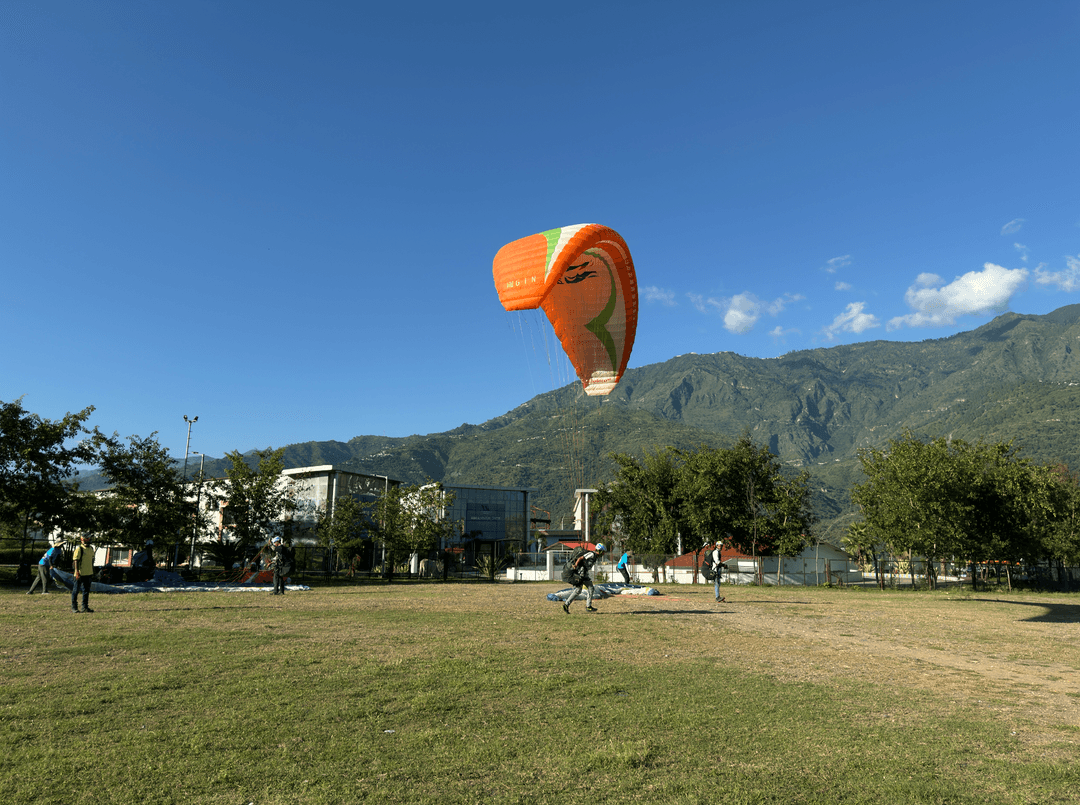
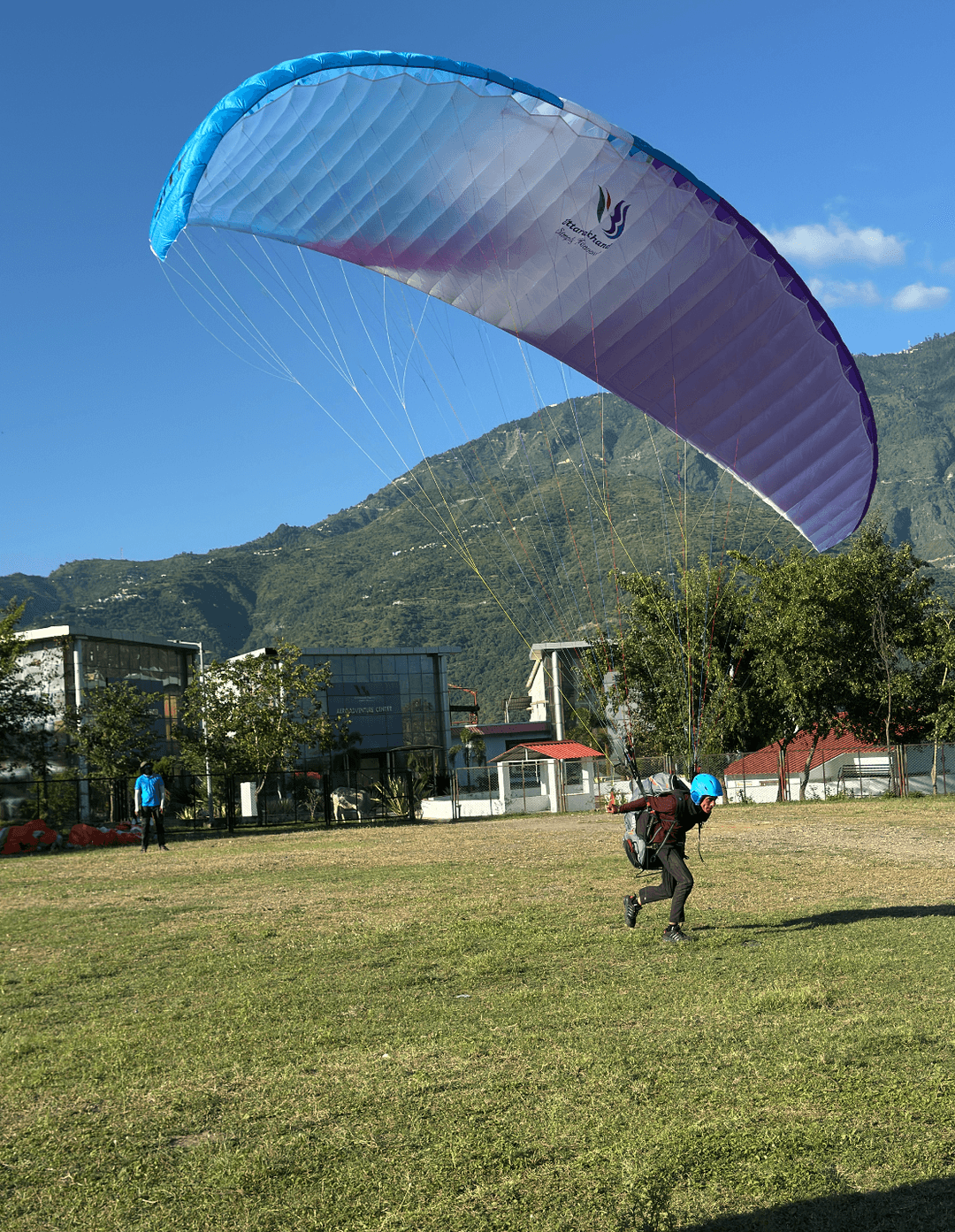
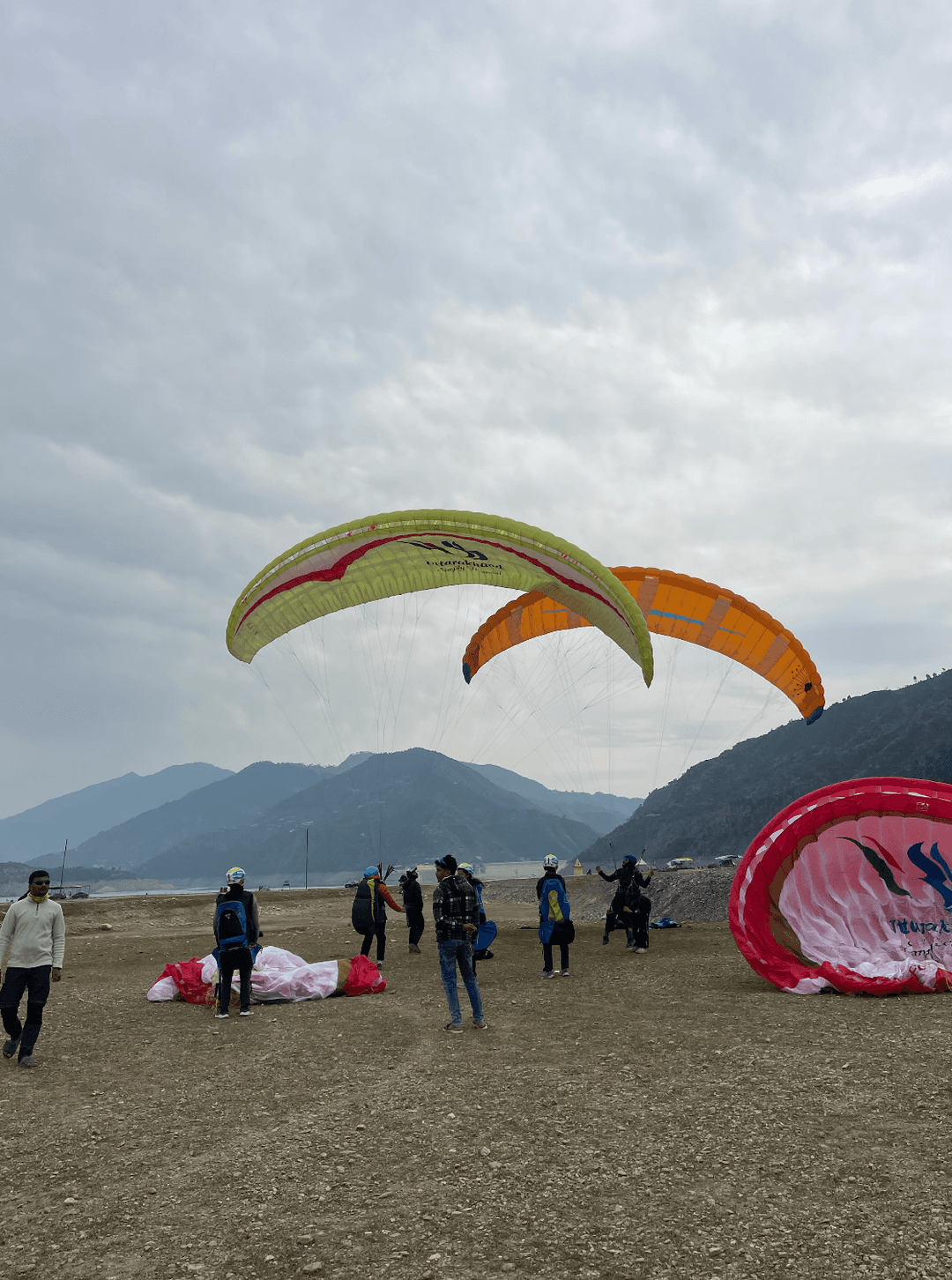
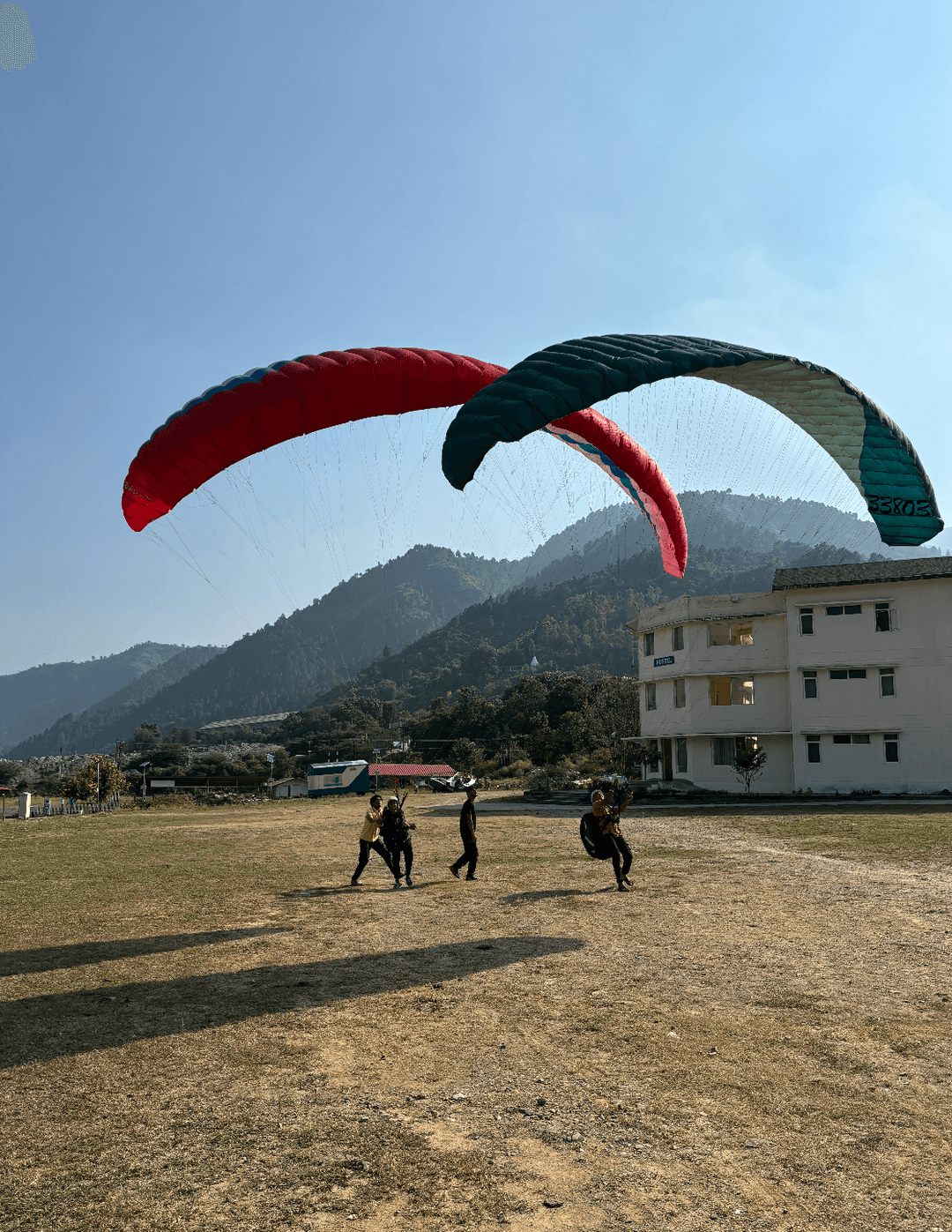
You'll learn how to prepare, inflate,deflate and control the wing on the ground (Ground Handling),Practice takeoffs and landings on small slopes (Bunny Hops), and have your first solo flight experience under instructor supervision.
All flights are radio-supervised by certified instructors for maximum safety.
Course Highlights
Your first step into the world of paragliding
Ground Handling
Glider inflation, deflation, and steering. Practice takeoffs and landings on small slopes (Bunny Hops).
Flight Theory
Study the basics of Aerodynamics in dedicated theory classes.
Solo Experience
Perform solo flights guided by radio instructions.
Instructor Supervision
All activities are closely monitored by certified instructors to ensure safety and proper learning.
Your Gateway to Free Flight
The P1 Introductory Course is designed as your first step into the magical world of paragliding. This comprehensive program introduces you to the fundamentals of free flight in a safe, controlled environment.
The course begins with ground training, understanding wind direction, equipment handling, and inflation techniques. Once confident, you'll proceed to nursery slopes for your first hops and ultimately, your First Solo flight.
When you're ready, you'll take off from a 200 ft hill for your first solo flight. This flight is radio-supervisedby your instructor, ensuring your safety throughout. The joy of your first solo flight is unmatched — unforgettable and liberating!
By the end of the course, you'll be eligible for the next P2 course .
Theory Sessions
Essential knowledge for safe paragliding
Practical Training
Hands-on experience with equipment and flight basics
Complete Course Coverage
Comprehensive training from ground to air
| Training Module | Skills Developed |
|---|---|
| Site and wind assessment | Understanding weather conditions and safety protocols |
| Equipment introduction | Familiarization with harness, wing, and safety gear |
| Canopy layout & pre-flight checks | 5-point safety check and equipment inspection |
| Forward inflation & ground handling | Wing control and inflation techniques |
| Take-off and landing techniques | Launch posture and safe landing procedures |
| Steering, slope runs, mini flights | Directional control and short flight experience |
| Radio supervised solo flights | Independent flight with instructor guidance |
| Post flight procedures | Equipment care and flight debriefing |
Skills Evaluation
What to Bring
P1 Limitations
FAQs: First Solo Flight
Common questions from beginners about the P1 Paragliding Course.
Safety is our number one priority. All training is conducted on small, gentle slopes in light wind conditions. Your First Solo flight is strictly radio-supervised by a certified instructor who guides your entire flight path and landing, minimizing risks significantly at Paragliding Mantra in Kamshet.
No previous experience is required! The P1 course is designed for absolute beginners. You only need a basic level of fitness to be able to run a few steps and carry your glider (about 15-20 kg) up a small hill at Paragliding Mantra in Kamshet.
The minimum age is generally 15 years (with parental consent). The typical weight range for student gliders is 40 kg (minimum) to 95 kg (maximum). Please contact us if you are outside this range for specific consultation at Paragliding Mantra in Kamshet.
Paragliding is entirely weather dependent. If weather conditions (rain, strong wind, or no wind) prevent flying, the missed hours or days are rescheduled at no extra charge. Theory classes typically continue indoors at Paragliding Mantra in Kamshet.
We provide all the necessary professional paragliding equipment (glider, harness, helmet, and radio). You only need to bring comfortable clothes, sports shoes, sunglasses, and sunscreen at Paragliding Mantra in Kamshet.
While the goal is the First Solo Flight, it depends on your aptitude and the weather. Our instructors will only authorize the flight once they are 100% confident in your ability to launch and follow radio commands safely. Most students achieve this goal at Paragliding Mantra in Kamshet.
Glimpses of the Sky
A peek into the P1 paragliding journey – from training hills to first solo flight
Ready for Your First Solo Flight?
Begin your paragliding journey with our comprehensive P1 Introductory course. Experience the magic of your first solo flight in just 3 days with expert instruction and radio supervision.
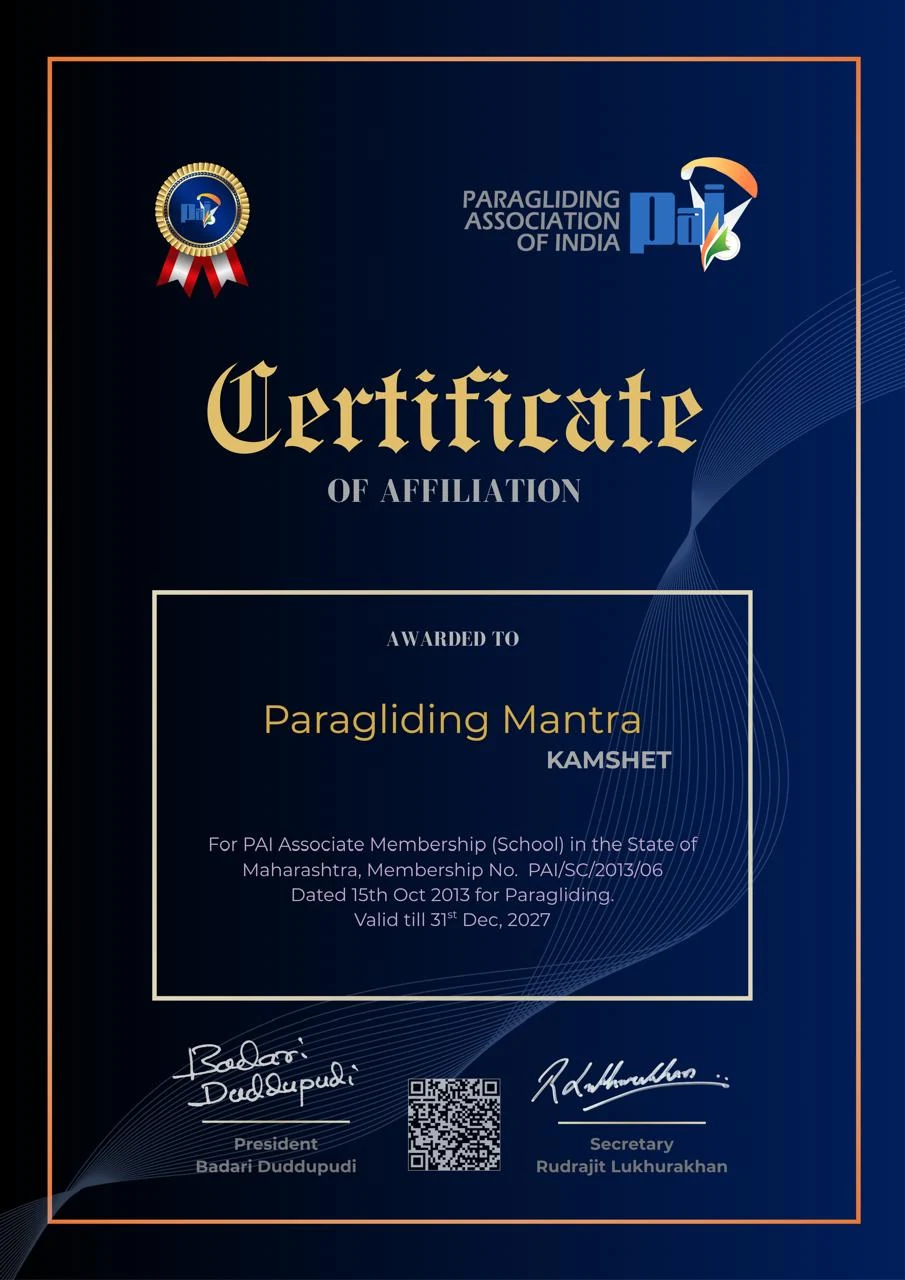
PAI-affiliated paragliding school
The Paragliding Association of India has awarded Paragliding Mantra, Kamshet, Associate Membership as a school in Maharashtra for paragliding.
- Membership
- PAI/SC/2013/06
- Affiliated since
- 15 October 2013