Location
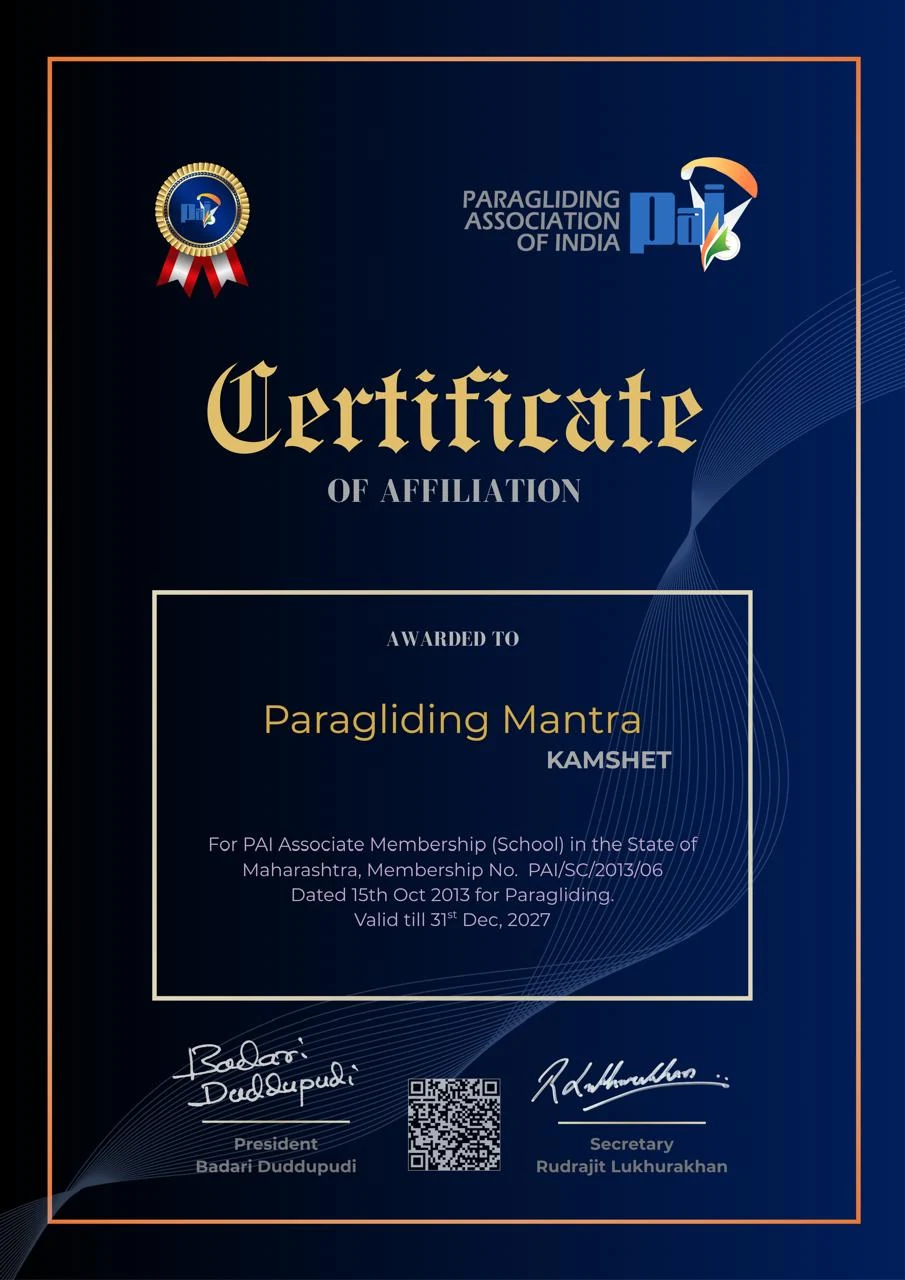
Paragliding Mantra • Kamshet
Prerequisites
No prior experience is required. This course is designed for complete beginners.
Practical Skills, Theory & Duration
Practical Skills
Ground Handling: Forward/reverse inflation, stabilizing wing overhead, directional control, pitch/roll management, and safe aborts.
Launching: Correct timing, reading wind cycles, smooth takeoffs.
In-flight: Maintaining straight flight, coordinated turns, airspeed control, and basic active piloting.
Landing: Approach planning, height judgment, and flare timing.
Theory & Details
Equipment: Structure, harness setup, reserve basics, helmet/radio use, inspection.
Flights: Includes 5–6 supervised solo flights under instructor guidance.
Duration
This fixed duration ensures steady progress while allowing enough practice and instructor supervision for safe development.
After demonstrating safe control and understanding core theory, students become eligible for APPI 1 (Discover) recognition.
Operational Rights & FAI Information
Prerogatives
APPI Rules
FAI Infos
Continue your progression
Ready for high flights and advanced control?
Move on to **APPI 2 Explore** to refine your soaring skills.
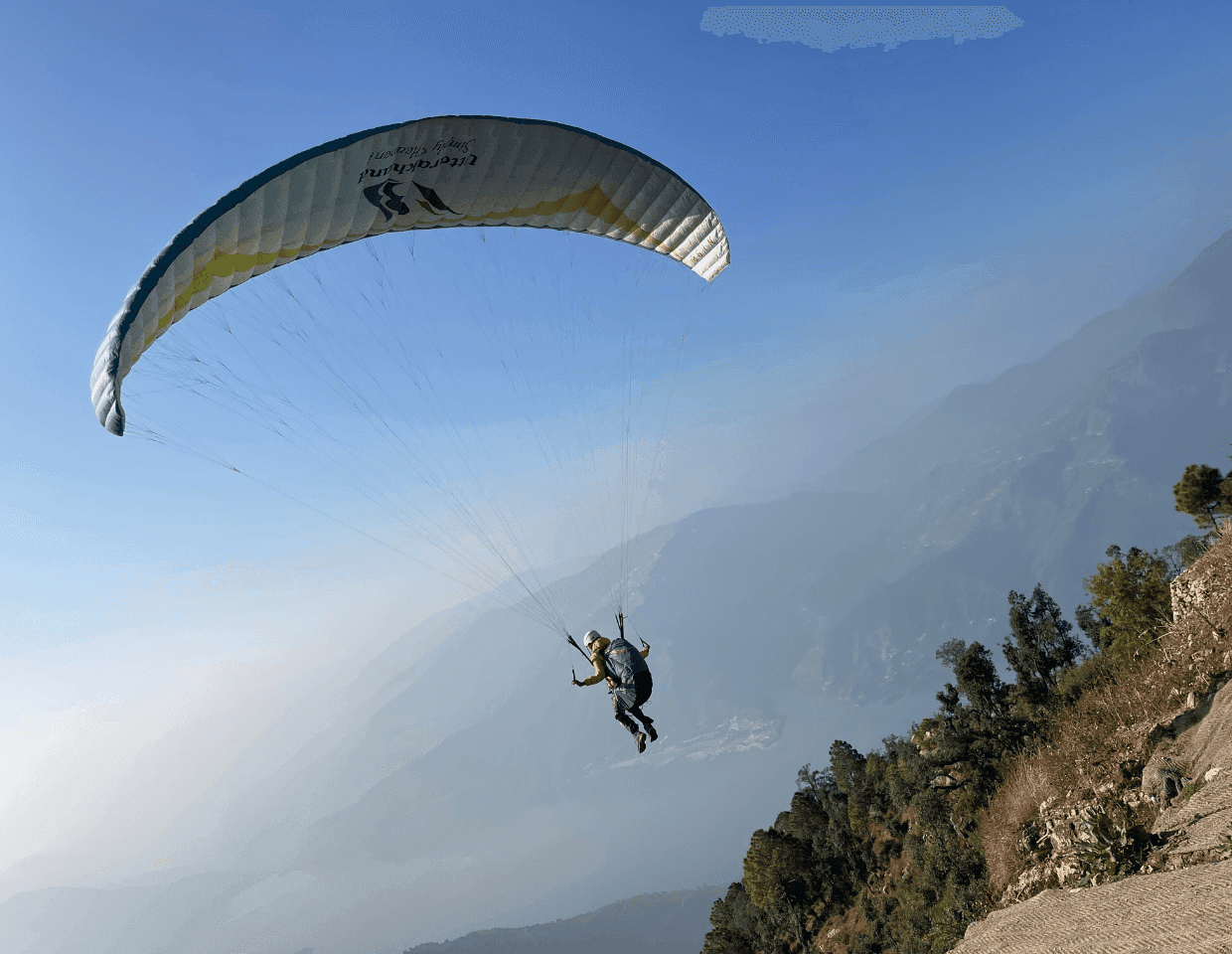
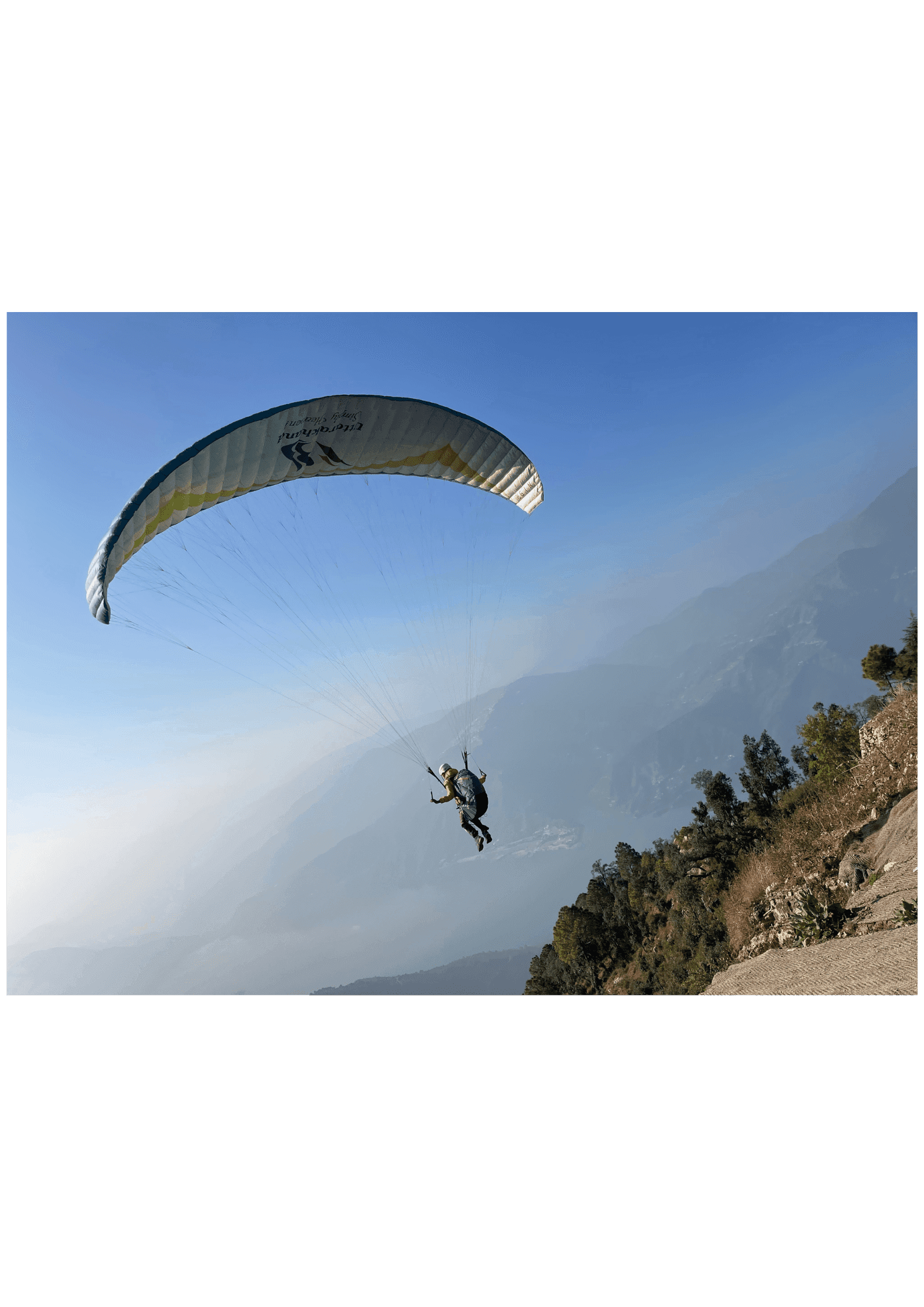
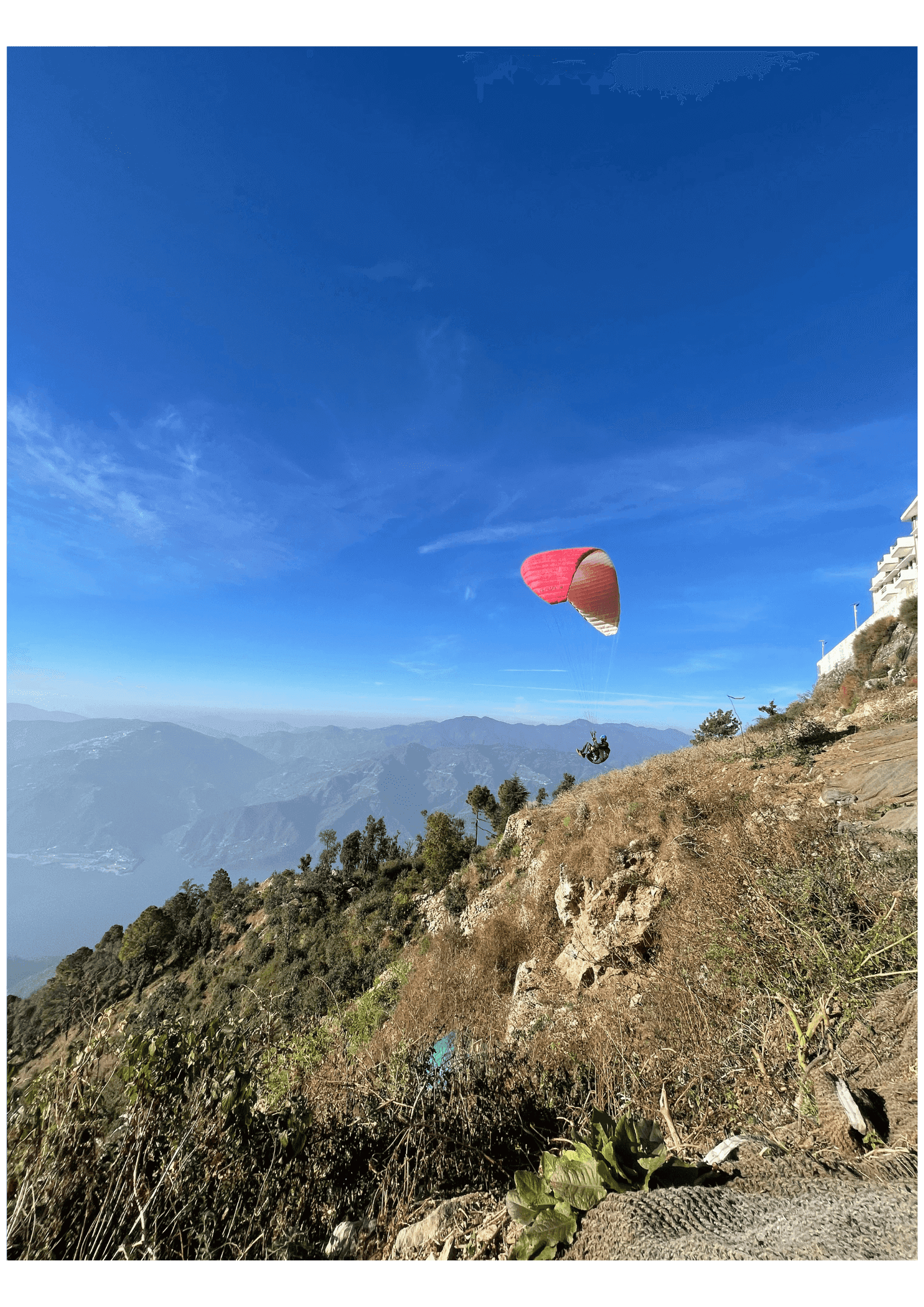
Training Moments at Paragliding Mantra
Frequently Asked Questions
This training program includes the complete P1 (Beginner) and P2 (Novice) levels. Students cover all skills, theory, and supervised flights required to achieve both levels within a structured 7-day period at Paragliding Mantra in Kamshet.
No. The course develops all essential beginner pilot skills from scratch, starting with equipment familiarization and pre-flight checks at Paragliding Mantra in Kamshet.
Practical training includes 5–6 supervised solo flights where you apply all learned skills—from takeoff to landing—under instructor guidance at Paragliding Mantra in Kamshet.
The complete training duration is exactly 7 days. This fixed duration ensures steady progress while allowing enough practice and supervision at Paragliding Mantra in Kamshet.
You will learn about lift, drag, angle of attack, wing behavior, and basic aerodynamics. Meteorology topics include wind, gusts, local weather patterns, and thermal awareness at Paragliding Mantra in Kamshet.
Yes. Equipment orientation includes paraglider structure, harness setup, reserve basics, helmet, and radio use, along with proper inspection routines at Paragliding Mantra in Kamshet.
After demonstrating safe control and understanding core theory, students become eligible for APPI 1 (Discover) beginner-level recognition at Paragliding Mantra in Kamshet.
Yes. APPI certifications are globally recognized. Depending on your country's NAC rules, it may also align with FAI IPPI standards. The certification is issued through Paragliding Mantra in Kamshet.
Yes. Safety routines, airmanship, radio communication, and emergency awareness are reinforced throughout the training at Paragliding Mantra in Kamshet.
You will learn forward and reverse inflation, stabilizing the wing, directional control, pitch/roll management, smooth takeoffs, coordinated turns, and flare timing for landings at Paragliding Mantra in Kamshet.