The short version
Learn how a paraglider wing creates lift, how pilots steer, use wind and thermals, launch from hills and prepare for a controlled landing.
A soft wing that becomes an aircraft
A paraglider looks like a fabric canopy, but when inflated it forms an aerodynamic wing. Openings along the leading edge allow air to enter internal cells, creating pressure that holds the wing's profile. Lines connect the canopy to the pilot's harness and distribute load across the structure. As the wing moves through the air, its shape redirects airflow and produces lift. Gravity provides the forward component of motion, which is why ordinary paragliding does not need an engine.
The wing continually descends relative to the surrounding air, but rising air can offset or exceed that descent. Pilots use terrain-generated ridge lift and columns of warmer rising air called thermals to remain aloft or gain height. A tandem pilot uses a larger certified system designed for pilot and passenger weights within a specified range.
How launch works
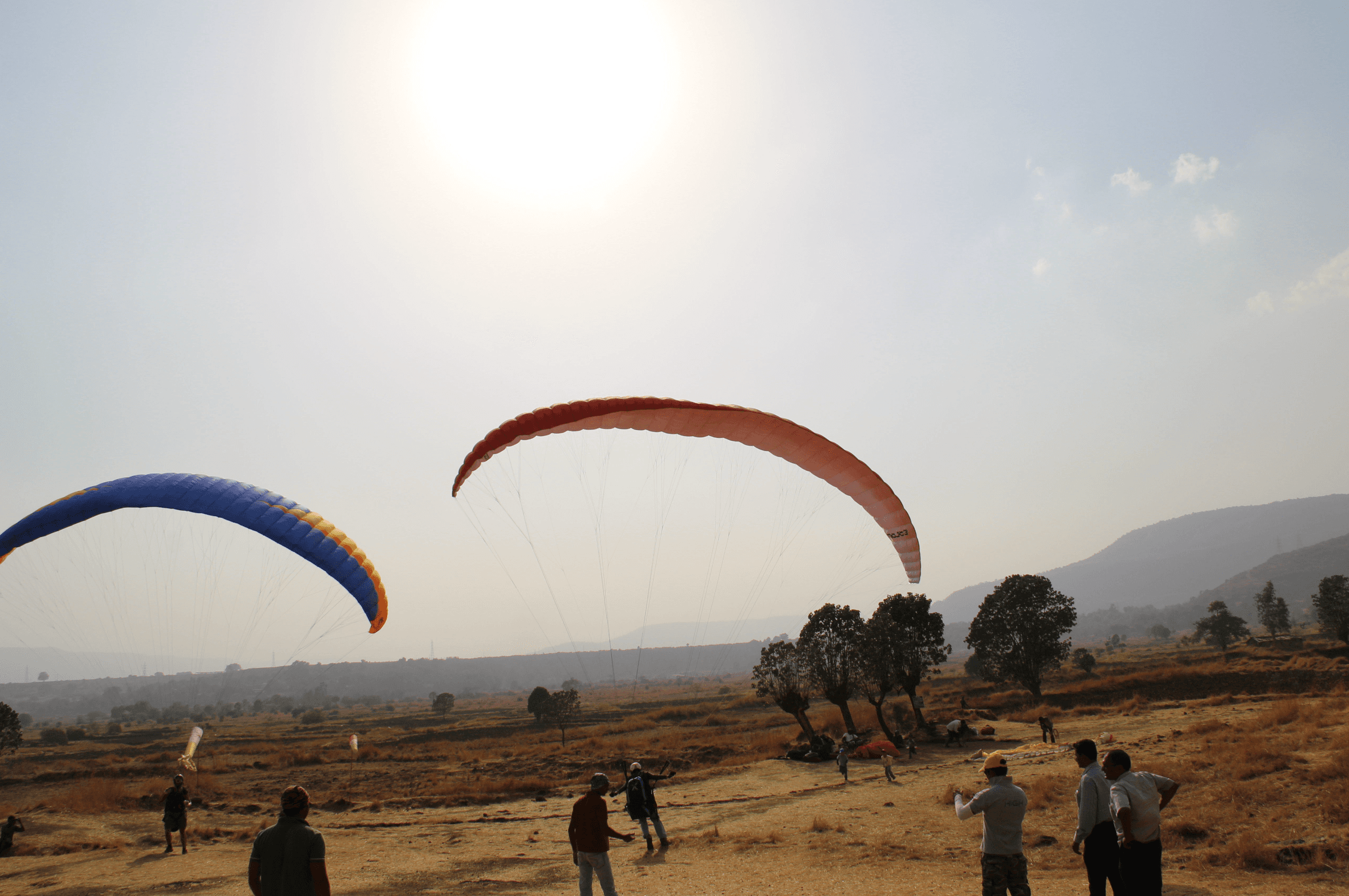
At a hill launch, the pilot lays out the canopy, checks lines and connections, evaluates airflow and inflates the wing overhead. Pilot and passenger move forward together while the pilot confirms that the canopy is correctly formed and the path is clear. Continued movement increases airflow over the wing until lift supports the pair. They do not jump from a cliff. If the inflation is poor or conditions change, the pilot can stop and reset.
The passenger's role is simple but important: listen, face the instructed direction and keep walking or running until told to stop. Sitting early can interfere with acceleration. Launch technique varies by wind strength and site, so the live briefing takes priority over generic advice. The pilot may wait many minutes for a suitable cycle even when other wings are flying.
Steering and speed control
The pilot holds brake controls connected to the trailing edge. Applying one side changes the wing shape and creates a turn; coordinated weight shift can support that movement. Applying both brakes changes speed and pitch within a controlled range. Pilots must avoid excessive or abrupt input that can push the wing outside normal flight. Risers and other controls may be used for specific trained techniques, but passengers should not touch them.
A paraglider cannot hover in still air or fly directly wherever desired. Its path depends on glide performance, wind and terrain. A headwind reduces progress over the ground, while a tailwind increases it. The pilot maintains safe separation from terrain and other aircraft, continually preserving a reachable landing option.
Wind, ridge lift and thermals
When wind meets a hill, part of the airflow is deflected upward. Pilots can use this ridge lift while remaining in an appropriate zone and following site traffic rules. Thermals form when the sun heats parts of the ground unevenly, creating rising bubbles or columns of air. Pilots identify them through wing feedback, instruments, terrain knowledge, clouds and the behaviour of other flyers and birds.
Lift can extend a flight, but active air also requires judgement. Strong thermals, gusts, cloud growth or poorly aligned wind may be unsuitable for a tandem passenger. This is why a sunny afternoon is not automatically the best flight time. The pilot combines forecasts with direct observations at launch and landing.
Harness, reserve and protective equipment
The pilot and passenger sit in separate harnesses connected to the wing through rated hardware. Helmets protect against impact, while a reserve parachute provides an emergency option within its operating limitations. Equipment is selected according to certified weight ranges and maintained under manufacturer guidance. Pre-flight checks confirm harness buckles, connections, lines and canopy condition. Accurate passenger weight helps the operator choose an appropriate system.
Equipment does not replace decision-making. Safe operations also depend on training, site knowledge, weather assessment, communication and the willingness to cancel. Passengers should never adjust or unclip hardware independently and should report anything that feels unclear before launch.
Approach and landing
The pilot plans landing well before reaching the field, assessing wind, obstacles, traffic and available height. A structured approach places the glider on a final path into the chosen area. Near the ground, the pilot uses a controlled flare to reduce forward and downward speed. Depending on conditions, the passenger may be told to raise their legs for a seated landing or stand and run. Follow the actual command rather than anticipating it.
After touchdown, the pilot controls the wing and the team removes equipment. The complete process—from inflation to landing—works because aerodynamic design, moving air, trained input and conservative choices operate together. For a first-hand introduction, a classic tandem allows a passenger to experience these principles while a qualified pilot remains responsible for the aircraft.
Ready to fly?
Now that you know what to expect, pick your format on joyrides - the classic tandem for pure sightseeing or instructional for a hands-on taste. Confirm your slot through contact.