The short version
Inside a P1 beginner paragliding course in Kamshet - ground handling, first solo flights, theory, daily schedule and honest expectations for new student pilots.
What P1 actually is
P1 is the first formal step of paragliding training: the level where you go from never having touched a wing to completing your first supervised solo flights. It is less about heroic airtime and more about foundations - equipment knowledge, wing control on the ground, launch technique, and safe straight-line flight to a planned landing.
In Kamshet's consistent early-season conditions, P1 is where a real pilot's instincts are built. Our P1 course page covers the formal structure; this post is about what the days actually contain.
Ground handling: where most learning happens
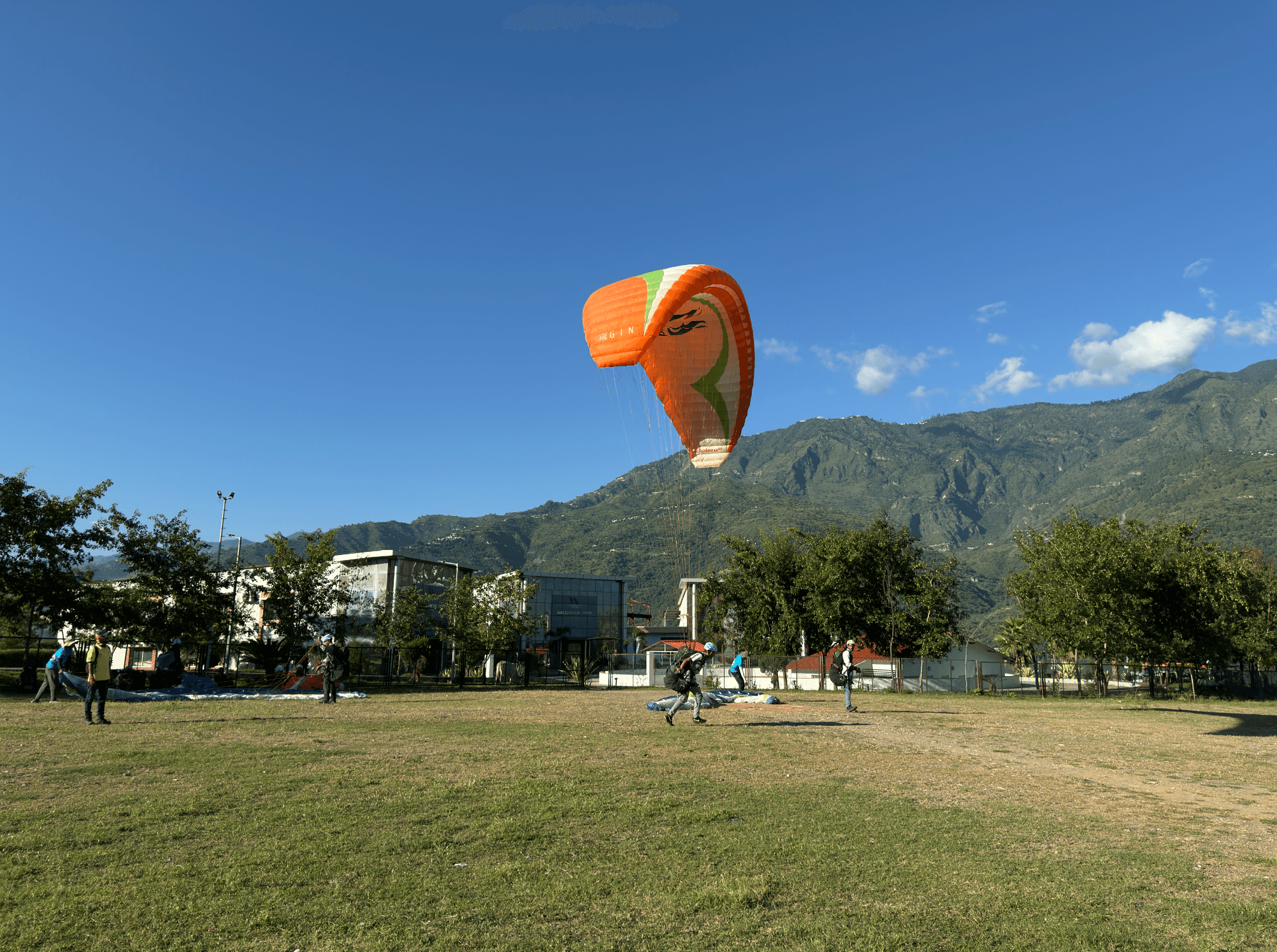
Expect to spend far more time with the wing on the ground than in the air at first. Inflation, kiting, controlling the canopy overhead, turning it, killing it - ground handling is the skill everything else stands on. Students who master it progress fast; students who rush it stall their training later.
This phase looks unglamorous and feels exhausting on day one. By day two or three the wing starts obeying you, and the first time you hold it centred overhead in a breeze, you will understand why instructors insist on it.
Your first solo flights
First flights are deliberately modest: short hops from a training slope or gentle top-to-bottom descents with radio guidance from your instructor. The aim is not duration but correct sequence - clean launch, stable flight, approach on instruction, landing on your feet.
Each flight is briefed before and debriefed after. By the end of P1 most students have a handful of solos, an understanding of how quickly conditions change, and profound respect for how much more there is to learn - which is the correct mindset for P2.
The theory that runs alongside
P1 is not only physical. You will cover basic aerology (wind, lift, turbulence), airspeed and glide concepts, equipment parts and checks, site assessment basics, emergency procedures and the rules that govern where you may fly. The theory is taught around the flying, not in a classroom marathon.
A logbook starts here too - every flight, ground session and lesson is recorded. That logbook is what later certifications, including the APPI pathway, build upon.
Honest expectations
You will not leave P1 as an independent pilot - you will leave as a supervised-flying beginner with correct foundations. Days are physical, sun-exposed and weather-dependent; some days fly, some days are ground school. Fitness, good footwear and patience matter more than bravery.
The students who do best are the ones who accept 'not today' without argument, hydrate, and treat ground-handling repetition as the actual course rather than the price of admission.
After P1: the real pathway
P1 graduates typically continue to P2 for supervised soaring and site diversity, then toward club-pilot and independent ratings. If you are unsure whether to commit, an instructional tandem first is a low-cost way to test the passion before course fees.
Enrol through contact with your preferred dates - early season is ideal for beginner training because conditions are smoother. Our paragliding courses in India page maps the full progression from P1 upward.
A typical P1 day, hour by hour
Mornings start with a weather read and site check, then ground-handling drills while the air is calm. Midday breaks for theory and rest when the sun is harsh, and the workable window - usually later afternoon - is when short training hops happen under radio guidance. Debrief and logbook entries close the day.
Expect physical tiredness more than fear. Carrying a packed wing uphill, running inflation drills and walking back for another go is real exercise - hydration and a decent breakfast matter more than courage.
Beginner mistakes that slow P1 down
The classic errors: looking at the wing instead of where you are running, braking too hard on landing approach, treating ground handling as a chore to escape rather than the core skill, and arriving under-rested or under-fuelled. Every instructor has seen each one a hundred times.
The other mistake is picking a course by price alone. Ask how many instructors per student, what happens on a non-flyable day, whether equipment is included and how the rating is assessed - our choosing a safe operator guide doubles as a school-selection checklist.