The short version
Understand the launch, height sensation, motion and anxiety of a first tandem paraglider flight, with practical ways to prepare without pressure.
Fear of heights does not produce one predictable reaction
Someone who dislikes balconies may still enjoy paragliding, while a confident traveller can feel nervous at launch. The visual and physical context is different from standing beside a fixed edge. Once airborne, there may be no nearby wall or vertical reference, and the passenger is supported in a harness beneath a wing rather than looking down from a ledge. This can feel more like moving through a wide landscape than hanging over an edge, but no operator can promise how an individual will respond.
Nervousness is normal and should be discussed rather than hidden. Tell the booking team and pilot that this is your first flight and describe what concerns you: the launch run, height, turns, equipment or loss of control. Specific concerns can be answered more usefully than a request for a guarantee that you will not be afraid.
What the launch feels like
The launch is often the most mentally demanding part because the passenger can see the slope and anticipates leaving the ground. After the wing inflates, the pilot gives direct movement commands. You walk or run together until lift takes your weight. There is normally no cliff jump and no intentional freefall. The transition can be surprisingly gradual when the airflow and movement are suitable.
Focus on the pilot's voice and the path immediately ahead rather than looking sideways. Continue moving until told to stop and do not sit early. If an inflation is not correct, the pilot may abort and reset. That is routine control, not a sign that something has gone wrong. Ask to hear the commands during the briefing so they are familiar before the wing rises.
What it feels like in the air
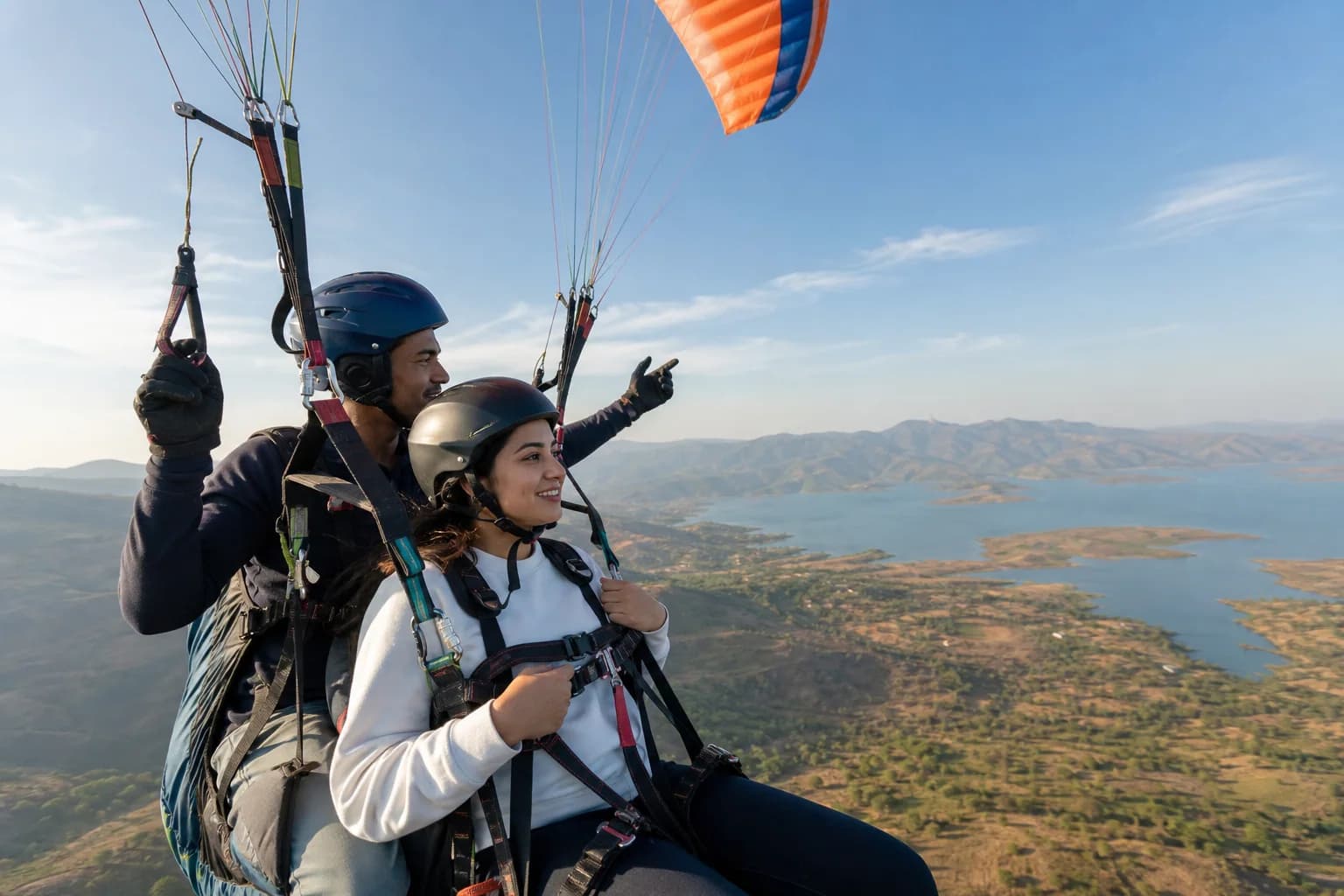
In a classic tandem, the passenger sits in a supported harness with the pilot behind. The wing moves forward through the air, and the broad view develops around you. Many guests describe a calm gliding sensation rather than a falling sensation. You can usually speak with the pilot. Normal turns create some bank and pressure, but the pilot can select a gentle style when conditions allow.
The air is not perfectly still. Small movements communicate what the atmosphere is doing, and thermic conditions can feel more active. Looking toward the horizon, breathing steadily and telling the pilot how you feel can help. Do not agree to acro if your goal is a calm introduction. Dynamic spirals and wingovers are a separate experience and should require clear consent.
Ways to prepare without forcing yourself
Learn the basic sequence from a reputable source, then stop watching dramatic accident compilations or extreme acro clips that do not represent a classic tandem. Choose an operator who answers questions patiently. Book a classic package, keep the day flexible and avoid a large audience pressuring you at launch. Wear secure shoes, eat a normal light meal, hydrate and sleep adequately. Physical comfort makes emotional regulation easier.
Use a simple breathing rhythm while waiting and break the experience into steps: arrive, meet the pilot, listen to the briefing, put on the harness and decide whether to proceed. You retain the ability to say no before launch. Paying or travelling with friends does not remove consent. A professional team should not shame a guest who decides that the activity is not right that day.
Motion sickness and physical sensations
Fear and motion sickness are different. A person may feel emotionally calm but become nauseous during repeated turns, while another may feel anxious without physical sickness. Tell the pilot about previous car, boat or amusement-ride sensitivity. Request gentle turns and speak up at the first sign of discomfort. The pilot may adjust the flight or prepare to land. Do not take unfamiliar medication without appropriate medical advice.
Harness pressure should feel supportive, not painful. Report a twisted strap or unusual discomfort before launch and again in flight. Cold, heat, dehydration and hunger can amplify unpleasant sensations, so dress for the season and carry water for waiting. Health conditions, recent surgery and significant mobility limitations require discussion before travel.
A simple mental preparation plan
The day before, confirm the meeting process, stop repeatedly searching for extreme-flight videos, sleep normally and prepare practical clothes and shoes. On the day, eat a light familiar meal, limit excess caffeine if it increases anxiety, arrive without rushing and tell the pilot exactly what worries you. Ask to repeat the launch commands and agree that the flight should remain gentle unless you request otherwise after becoming comfortable.
At launch, focus only on the next instruction rather than imagining the entire flight. Slow your exhale, keep looking along the launch path and continue moving until the pilot tells you otherwise. Pause before connection if panic prevents you from hearing instructions, communicating or moving safely. Choosing not to launch—or trying another day—is a valid outcome, not a failure.
Choosing the right first experience
A classic tandem is the clearest choice for a nervous first-timer. Instructional tandem can suit someone whose anxiety reduces when they understand the controls, but it also adds information and participation. Acro is not an anxiety cure and should not be presented as a test of courage. Select the least intense format that genuinely interests you.
Weather remains part of the decision. Waiting can increase anxiety, but it gives the pilot time to select an appropriate window. Do not demand an immediate launch simply to finish the experience. If conditions or emotions are unsuitable, rescheduling is reasonable. Tandem paragliding can be memorable for someone who fears heights, but the goal is informed, voluntary participation—not proving anything to other people.
Ready to experience it?
Ready to stop reading and start flying? Browse joyrides for tandem formats, check courses if you want to learn properly, or message us on contact for current conditions and slots.