The short version
Learn how pilot qualifications, weather checks, equipment, passenger briefings and honest decisions support tandem paragliding safety in Kamshet.
A realistic answer about risk
Paragliding is an adventure aviation activity, so it cannot be described as risk free. A responsible tandem operation manages risk through trained pilots, suitable equipment, conservative weather decisions, appropriate sites, passenger screening and disciplined launch and landing procedures. First-time guests do not need to control the wing, but they must listen carefully and perform the launch and landing actions requested by the pilot. Safety is a shared process: the operator provides expertise and equipment, while the passenger provides honest information and follows instructions.
The Paragliding Association of India promotes structured training, pilot ratings, insurance, site practices and incident reporting as parts of a safer flying culture. APPI professional education similarly covers equipment, aerodynamics, weather, risk management and tandem procedures. A logo alone is not enough; guests should verify the person and operation behind the claim. Ask who will fly, what qualification they hold, how recently they have operated at the site and how the equipment is maintained.
Pilot competence and local experience
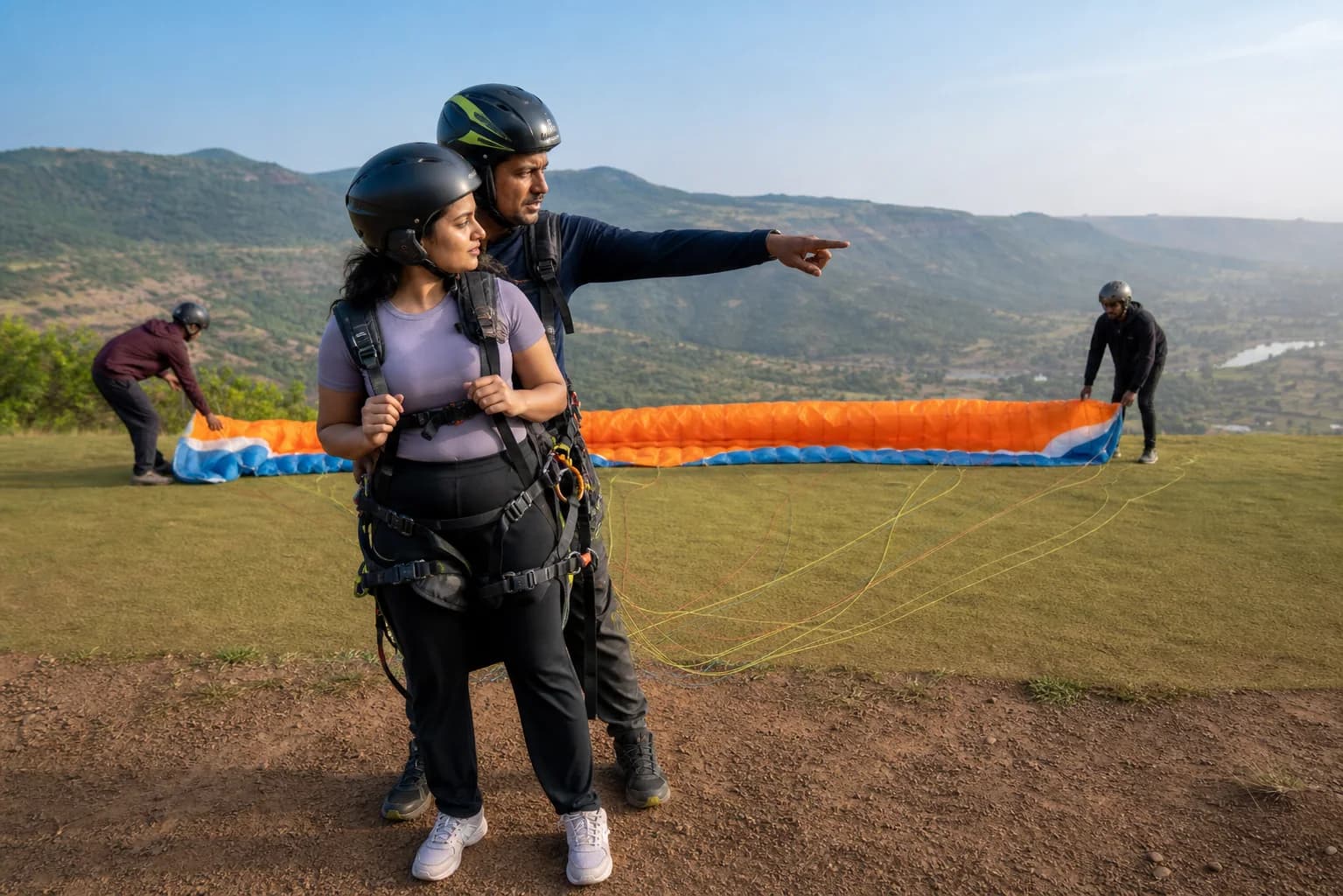
A tandem pilot must manage a larger wing, passenger communication, launch coordination and landing while continuously assessing the air. Local experience matters because hills create site-specific airflow, approach routes and hazards. The pilot should know the active takeoff, landing field and alternatives. Professional conduct is visible before launch: the pilot asks relevant questions, checks the harness connection, explains the run, watches conditions and is willing to wait. Confidence should come from methodical behaviour, not from dramatic promises or pressure.
Passengers can ask to see the pilot's current credentials and discuss the chosen flight type. An acrobatic experience requires different judgement from a calm sightseeing flight and should never be added without clear consent. If you want a gentle flight, say so. If you feel sick, anxious or physically unable to run, tell the team before clipping in. A good operator would rather change the plan than hide a concern.
Equipment checks that happen before flight
The tandem system normally includes a wing, pilot and passenger harnesses, helmets, connection hardware and an emergency reserve appropriate to the setup. Equipment must be used within its certified limits and maintained according to the manufacturer's instructions. Before launch, the pilot lays out and inspects the wing, checks lines, secures harness buckles, confirms connection points and evaluates the inflation area. The passenger should not adjust or unclip equipment independently. If something feels loose or unclear, stop and ask.
Passenger weight matters because wings and harness systems have operating ranges. Provide an accurate current weight when booking; this is not a judgement about body size. It helps the team select equipment, pilot and conditions appropriately. Clothing also affects the launch. Closed shoes with grip are preferable, while sandals, heels and loose scarves can create problems. Secure phones and personal items unless the operator has approved a mounting or storage method.
Why weather decisions are central to safety
Paragliders fly within moving air, which makes wind direction, speed, gusts, thermals, cloud development and visibility operational factors. A clear sky is not proof of suitable conditions. Wind can be too weak to launch cleanly, too strong for the site or poorly aligned with the slope. Conditions can also be acceptable for an experienced solo pilot but unsuitable for a tandem passenger. The operating pilot has to judge the entire combination, not a single weather-app number.
Waiting and cancellation are normal safety tools. A delayed launch may allow a gusty cycle to pass; a site change may better match wind direction; a cancellation may prevent exposure to an unacceptable trend. Guests should never pressure a pilot because they travelled far or have another appointment. Ask about rescheduling before booking and keep enough time in the day. An operator who cancels for a clearly explained safety reason is demonstrating judgement, not poor customer service.
Your role during launch, flight and landing
During the briefing, learn when to walk, run and stop. At launch, continue moving as instructed instead of sitting early or jumping. Once airborne, settle into the harness only when the pilot directs you. Keep hands away from lines and controls unless invited during an instructional flight. Tell the pilot immediately if you feel uncomfortable or nauseous. Before landing, listen for the required leg position and be prepared to stand or run if instructed. Procedures vary with the site and conditions, so the live briefing overrides generic advice online.
Health, consent and choosing an operator
Disclose pregnancy, recent surgery, serious joint or back problems, heart conditions, seizure history, severe vertigo or any issue that could affect running, posture or communication. The website cannot determine medical fitness; discuss uncertainty with a qualified medical professional and the operator. Do not fly while intoxicated. Minors should have appropriate guardian consent, and every passenger should personally agree to the experience without pressure from a group.
Choose an operator who communicates clearly about credentials, equipment, passenger limits, weather, pricing and cancellation. Read recent reviews for patterns rather than relying on one comment. Confirm the meeting point and active phone number. Paragliding Mantra uses briefings and pilot-led weather decisions for tandem operations in Kamshet, but every guest should still ask questions and make an informed choice. Safety is strongest when no one treats the flight as guaranteed.
How to interpret safety statistics and online claims
A single internet fatality rate rarely answers whether your proposed Kamshet tandem is well managed. Figures may mix commercial tandems, independent pilots, training, acro and cross-country flying across different countries and reporting systems. Without exposure data, definitions and a comparable operating context, a dramatic percentage can mislead in either direction. Paragliding remains an adventure aviation activity with real risk; responsible operators reduce risk but cannot promise zero risk.
Use evidence you can verify for the actual booking: the pilot's relevant qualification and recent tandem experience, matched equipment, passenger screening, a complete briefing, conservative weather decisions and written cancellation terms. Never accept a guarantee of perfect safety, and never let an unsupported statistic replace questions about the people and system responsible for your flight.
Still have safety questions?
Safety is mostly about operator discipline - read how classic tandems are run, browse the FAQs, or ask us directly on contact. When you are ready, joyrides lists current formats.