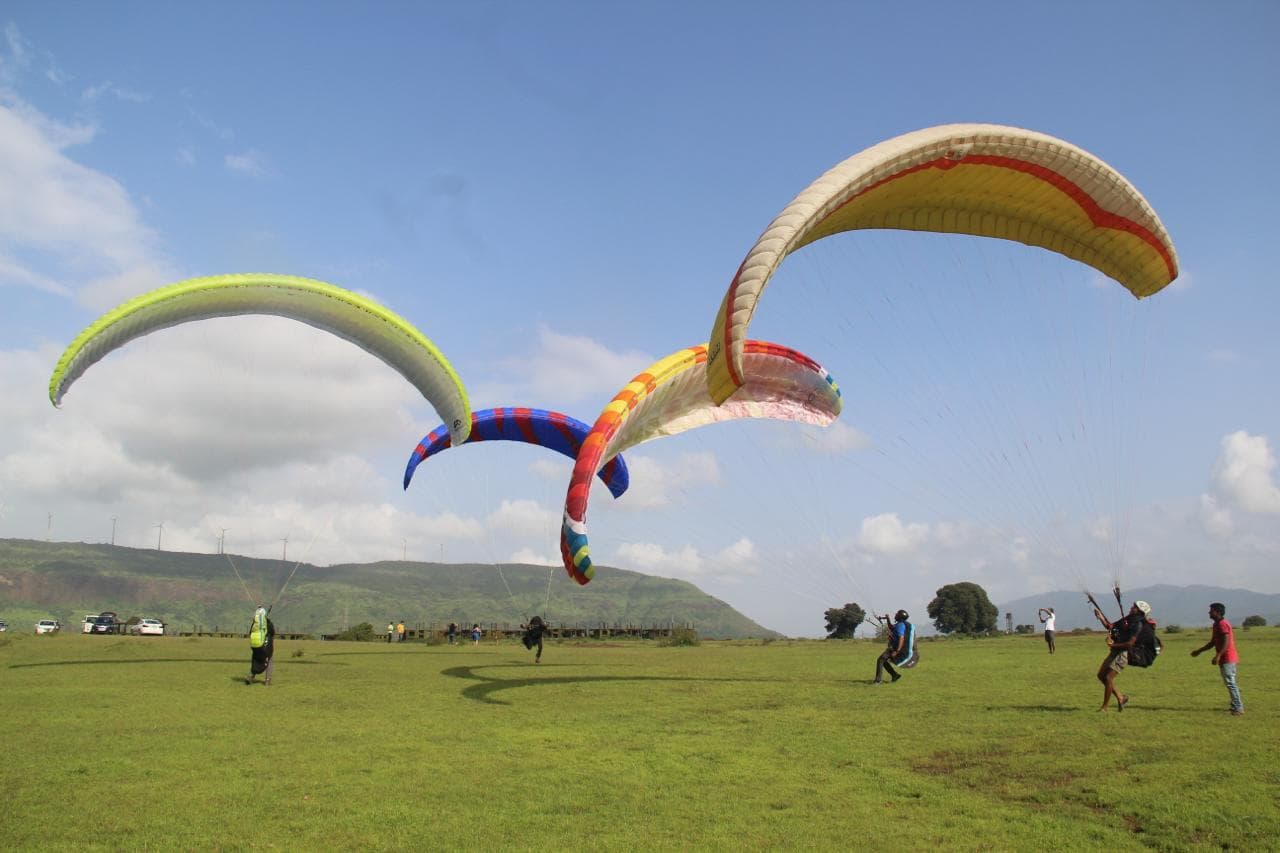
The short version
Understand how wind, gusts, rain, clouds, visibility and thermals affect paragliding—and what to expect when a Kamshet booking is delayed.
A booking reserves service, not the sky
Paragliding depends directly on the atmosphere. A reservation can organise the pilot, equipment and transport, but it cannot guarantee that the launch and landing environment will remain suitable. Forecasts help with planning, yet local airflow can change quickly around hills. The final decision is made from the forecast, observations and the pilot's judgement at the site. A delay or cancellation is therefore an expected safety control, not proof that the operator forgot the booking.
Guests often see another wing in the air and assume every passenger should launch. That comparison ignores differences in pilot skill, wing, total weight, flight purpose and the moment each person launched. Conditions suitable for an experienced solo pilot may be outside a tandem operator's limits. The pilot responsible for your flight must make an independent decision.
Wind speed is only one part of the picture
A useful launch needs wind within an appropriate range, from a workable direction and with an acceptable trend. Wind that is too weak can make inflation and takeoff difficult. Wind that is too strong can reduce forward progress and complicate ground handling. Crosswind may not support the chosen slope. The average speed can appear acceptable while gusts repeatedly exceed a safe range, so a single number from a weather application is insufficient.
Terrain reshapes airflow. Wind passing over ridges, trees and buildings can create turbulence or rotor. Different launch sites face different directions, which is why an operator may move when the regional wind changes. A site transfer consumes time but can be a responsible response. If no suitable site exists, cancellation remains the correct option.
Thermals and daytime heating
Sunlight heats the ground unevenly, producing rising air called thermals. Pilots can use thermals to gain altitude and extend a flight, but strong cycles can also create active air that is uncomfortable or unsuitable for a first-time passenger. Heating changes through the day, so the preferred reporting window may shift by season. A sunny afternoon is not automatically safer than a cloudy morning.
The spaces between thermals can contain sinking air, and their edges may feel turbulent. Experienced pilots read terrain, clouds, instruments and wing feedback to understand the cycle. Tandem pilots also consider passenger comfort and landing options. They may wait through a strong period or select a simpler plan even when lift could create longer airtime.
Rain, cloud and visibility
Rain can affect wing behaviour, reduce grip at launch and landing and signal a changing system. Low cloud can obscure terrain and remove visual references. Haze or mist can make it difficult to judge other traffic and the landing approach. A pilot needs a clear, legal and practical view of the route—not merely a visible patch above takeoff. Flights should not enter cloud to satisfy a schedule.
Developing storms are especially serious because gust fronts and strong vertical air can arrive before rain reaches the hill. Lightning and rapidly growing cloud demand conservative separation. If a pilot ends operations while the sky above guests still looks bright, they may be responding to development elsewhere in the valley or an approaching trend visible through professional weather information.
Launch and landing must both work
Good wind at launch is not enough. The pilot must preserve a suitable landing area and approach throughout the flight. Wind at valley level can differ from the hilltop, and fields may become wet, obstructed or affected by local activity. Traffic from other gliders also matters. An operation should coordinate launch order and avoid creating pressure to fly when the landing environment is crowded.
Access is another part of safety. Rain or road damage can prevent vehicles and crew from reaching the site reliably. If retrieval, communication or emergency access is compromised, the team may pause even when the canopy could technically inflate. Commercial flying is a complete ground-and-air system rather than a moment at the edge of a hill.
There is no universal safe wind number
Guests often ask for one wind-speed limit, but a standalone number is unsafe and incomplete. The usable range changes with launch direction and shape, gust spread, trend, wing and loaded weight, pilot qualification, thermal activity and the landing field. A town-level app may also differ from actual airflow on the ridge. For the same reason, a screenshot from another operator or another hour cannot approve your flight.
A responsible go/no-go assessment combines forecast models with wind observed at launch and landing, cloud development, visibility, terrain effects, traffic and escape options. Passengers should ask how the decision is made, not negotiate a threshold. Students learn these variables progressively during formal training rather than using a single number as permission to fly independently.
What guests should do during a weather hold
Keep your phone available, stay in the designated waiting area and listen for updates. Eat, hydrate and protect yourself from sun or cold. Do not walk onto the launch, distract pilots during preparation or demand a fixed countdown. Ask for a clear explanation and an approximate review time, while recognising that the atmosphere may not resolve on schedule. If you have a hard departure deadline, share it calmly and discuss rescheduling.
Before booking, read the operator's policy for weather cancellation, refunds, date changes, transport and media. Keep half a day flexible and avoid non-refundable onward plans. Paragliding Mantra may wait, change sites, shorten the proposed plan or reschedule after assessing Kamshet conditions. Those choices protect passengers and pilots. The most trustworthy weather promise is not that you will definitely fly; it is that the team will fly only when its professional assessment supports the operation.
Still have safety questions?
Safety is mostly about operator discipline - read how classic tandems are run, browse the FAQs, or ask us directly on contact. When you are ready, joyrides lists current formats.