Training Location
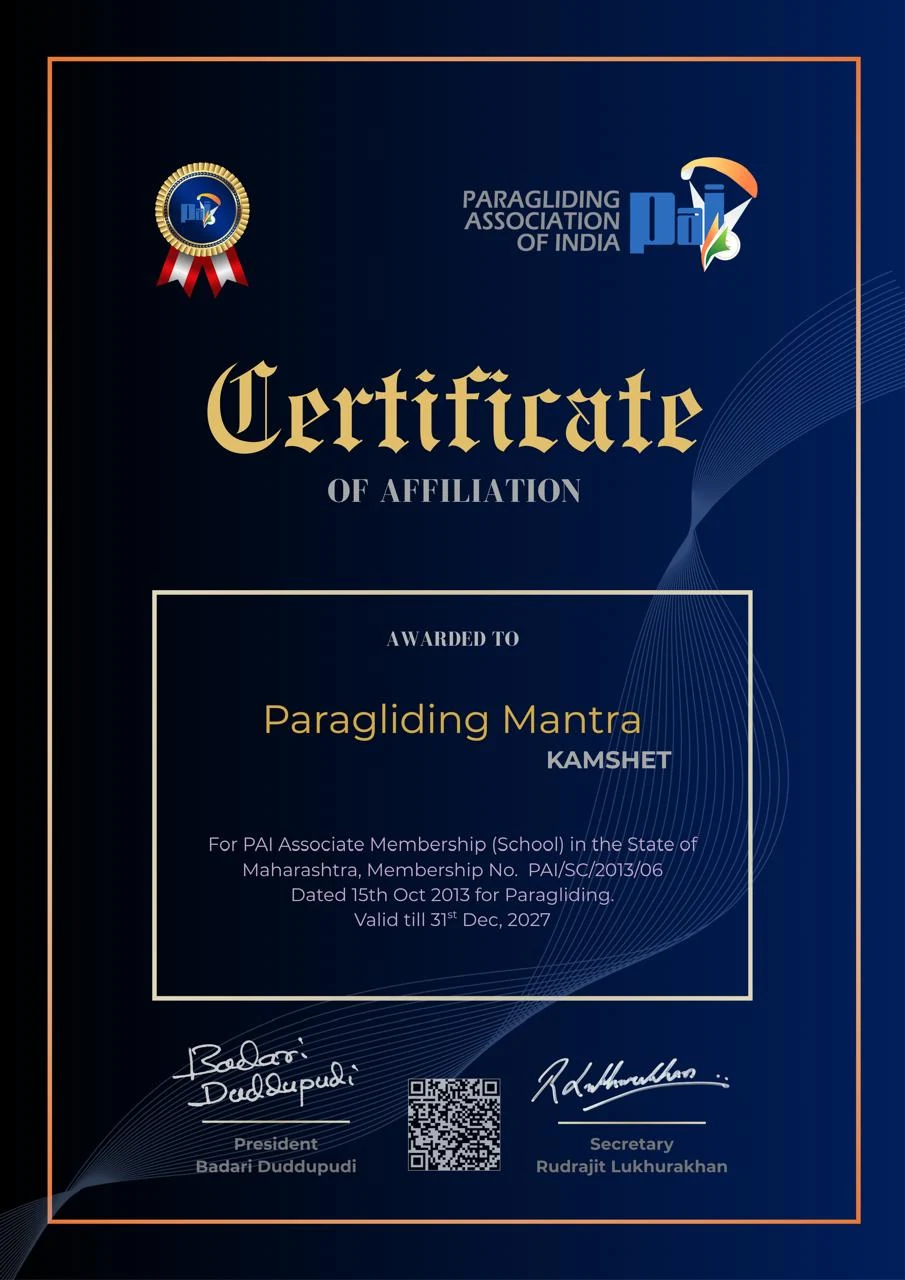
Paragliding Mantra • Kamshet, Maharashtra
Prerequisites
• Pilot must be able to take off and land safely in smooth conditions.
• Must be comfortable with basic flight control & gentle turns.
• No APPI rating requirement.
• Suitable for progressing pilots aiming for APPI 4 / XC foundation skills.
Training Focus
• Thermal formation & terrain reading
• Safe thermal entry strategies
• Centering & efficient climbing
• Managing drift, wind influence & decision-making
• Linking thermals & short XC attempts
• Gaggle etiquette & safe shared thermalling
Skill Development
• Perform smooth thermal entries
• Maintain consistent circling
• Identify core, edge & drift
• Climb efficiently in varying lift
• Execute transitions & leave thermals at the right moment
• Demonstrate safe independent thermalling decisions
Outcome
Pilots completing this program gain the skills required for thermal flying and XC readiness. This course significantly contributes to progression toward APPI 4 and advanced mountain flying skills.
Prerogatives
After completion, pilots can fly confidently in thermal conditions, choose safe lines, climb efficiently, make better decisions, and manage varying active air with improved safety margins.
Safety & Rules
All flying is supervised. Weather conditions are evaluated daily. Students advance only when demonstrating full control and stable understanding of thermalling concepts.
XC Preparation
This course prepares you for the first short XC flights by teaching how to link thermals, manage altitude, visualize routes, and plan transitions safely.
7-Day Thermalling Syllabus – Step-by-Step Progression
| Day | Ground Session | Flight Training | Key Objectives |
|---|---|---|---|
| Day 1 | • Theory of thermals: formation, triggers, cycles • Reading clouds & terrain • Safety & airspace awareness | • Orientation flights in smooth conditions • Gentle turns & circles • Spotting thermal triggers visually | Understand thermal basics, recognize safe entry zones, build awareness. |
| Day 2 | • Thermal structure: core, edge, drift • Reading vario & sink tones • Circling techniques | • Entering weak thermals • Maintaining consistent circles • Bank angle control practice | Develop thermal entry precision & smooth turning technique. |
| Day 3 | • Weather analysis for thermalling • Stability vs instability • Wind influence on thermals | • Climbing in weak lift • Finding & centering the core • Small XC attempts in local area | Learn core-centering, drift management & staying longer in lift. |
| Day 4 | • Advanced circling: flat vs steep turns • Gaggle flying etiquette • Collision avoidance | • Shared thermal flying • Joining a gaggle safely • Using other pilots as markers | Gain confidence in group thermalling & apply safety protocols. |
| Day 5 | • Decision-making in thermalling • When to leave a thermal • Mental focus & energy management | • Climb-and-glide practice • Linking multiple thermals • Short XC task with instructor | Build efficiency in transitions & route selection. |
| Day 6 | • Site thermal mapping • Convergence & inversions • Risk assessment in stronger lift | • Flying stronger thermals • S-turn & figure-8 entry • Climb to cloudbase (if safe) | Handle stronger conditions confidently while maintaining safety. |
| Day 7 | • Skill review & thermal strategy • XC planning basics • Independent flight briefing | • Independent XC-style flight • Full thermalling cycle: find, enter, center, climb, leave | Demonstrate independent thermalling & XC readiness. |
Who Should Join the Thermalling Course?
Recreational Pilots Wanting to Improve
Perfect for pilots who fly confidently in smooth air and now want to grow into active air understanding, thermal recognition, and longer, more enjoyable flights.
Pilots Preparing for XC Flying
Ideal for those who aim to attempt their first short XC flights. The course teaches you how to climb higher, link thermals, read terrain, and make better route selections.
Safety-Focused Intermediate Pilots
If you want a deeper understanding of weather, glider behavior, and safe handling in active conditions, this course builds solid judgment and long-term flying confidence.
Equipment: What’s Provided & What You Need
Equipment Provided by School
- Training glider & harness (beginner/intermediate stages)
- Helmet & radio supervision
- Daily briefing & site evaluation support
- Flight task guidance & progress tracking
- Post-flight analysis & instructor feedback
As you advance into stronger thermalling & XC prep, using your own gear is recommended.
Required Personal Gear
- Comfortable flying boots & gloves
- Weather-appropriate outdoor clothing
- EN-certified helmet & radio (if not using school gear)
- Water, sunglasses & personal accessories
Ready for the next step?
Build on your thermalling skills with the APPI 4 Progress Program.
After learning to climb, center thermals & link lift lines, the next stage is mastering XC-level flying & advanced decision-making.
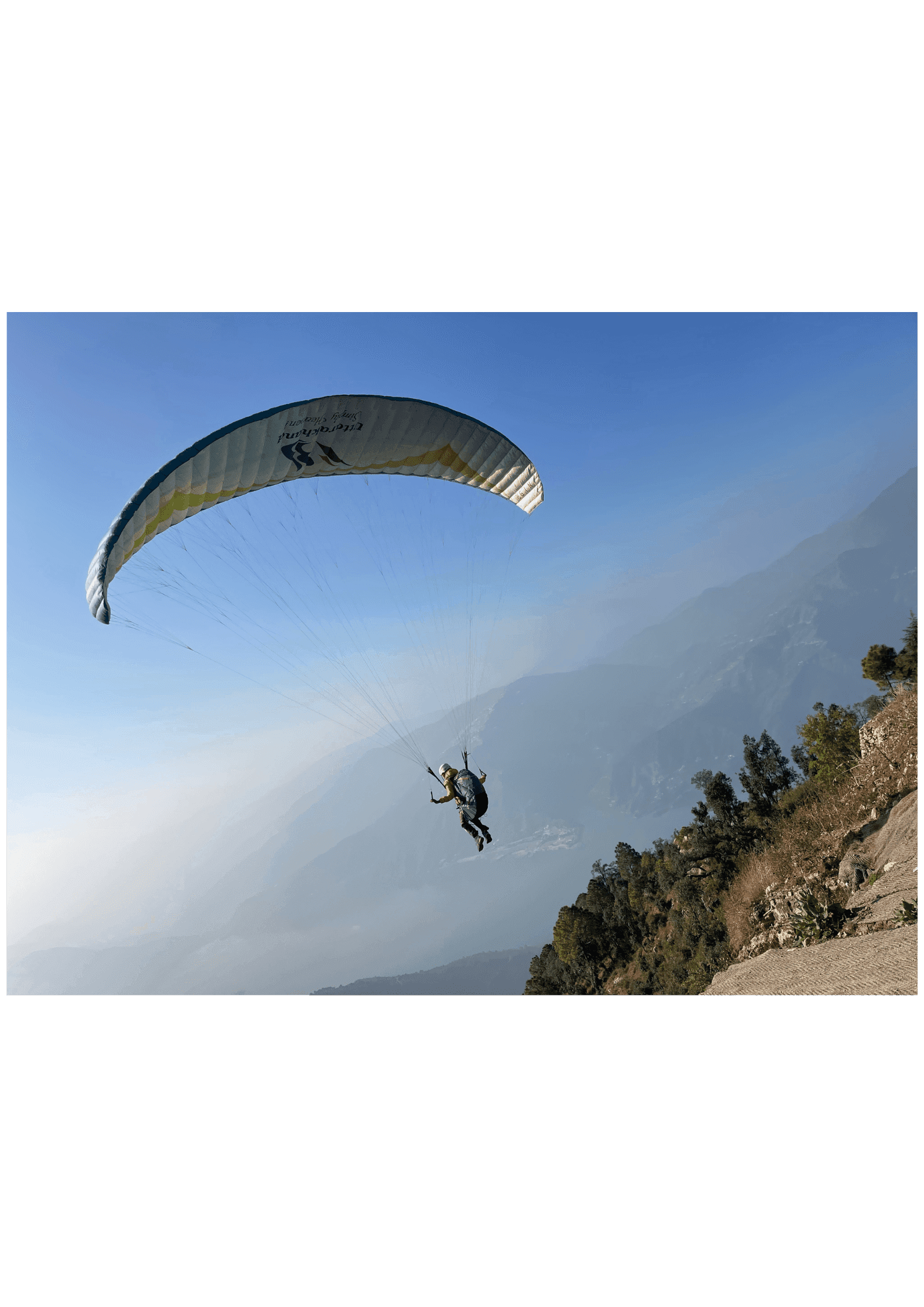
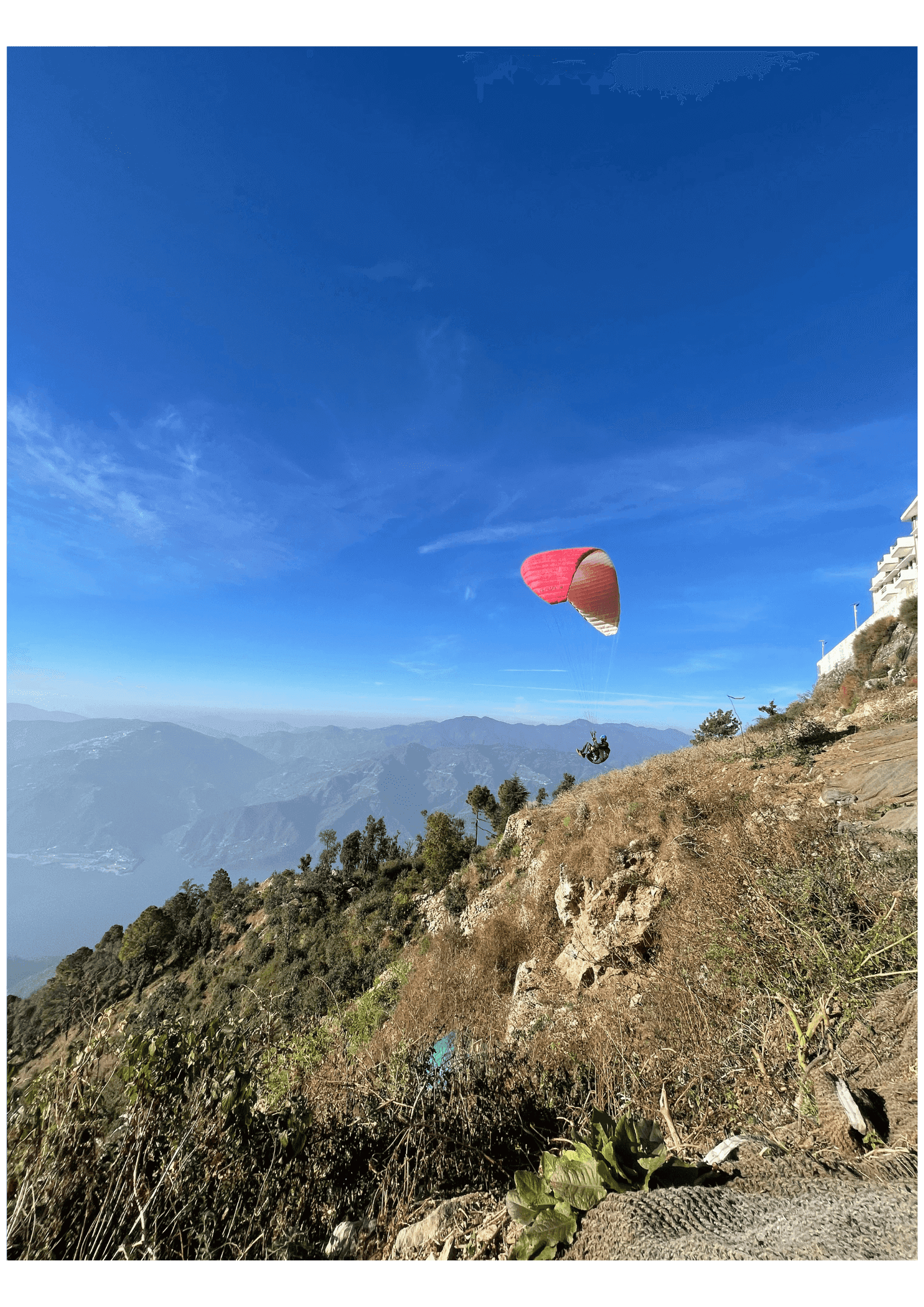
Training Moments at Paragliding Mantra
Frequently Asked Questions
What is the Thermalling Course?
It is a structured 7-day flying program that teaches pilots how to identify, enter, center, and climb thermals safely. This course builds the core skills required for XC flying.
Do I need prior thermalling experience?
No. You only need basic takeoff, landing, and controlled turns. Everything else is taught step-by-step during the program.
Will this prepare me for XC flying?
Yes! This is the foundation to XC. You’ll learn how to climb, maintain altitude, link lift sources, read terrain, and plan small XC tasks.
Where does the training happen?
All thermalling flights take place at Paragliding Mantra’s certified sites in Kamshet, Maharashtra — perfect terrain for thermal flying.
Is equipment provided?
Yes — training glider, harness, helmet, radio. Advanced pilots may bring personal gear, especially for XC-prep stages.