The short version
Compare paragliding and skydiving by launch, altitude, freefall, duration, training, cost, risk controls and the experience for beginners.
The fundamental difference
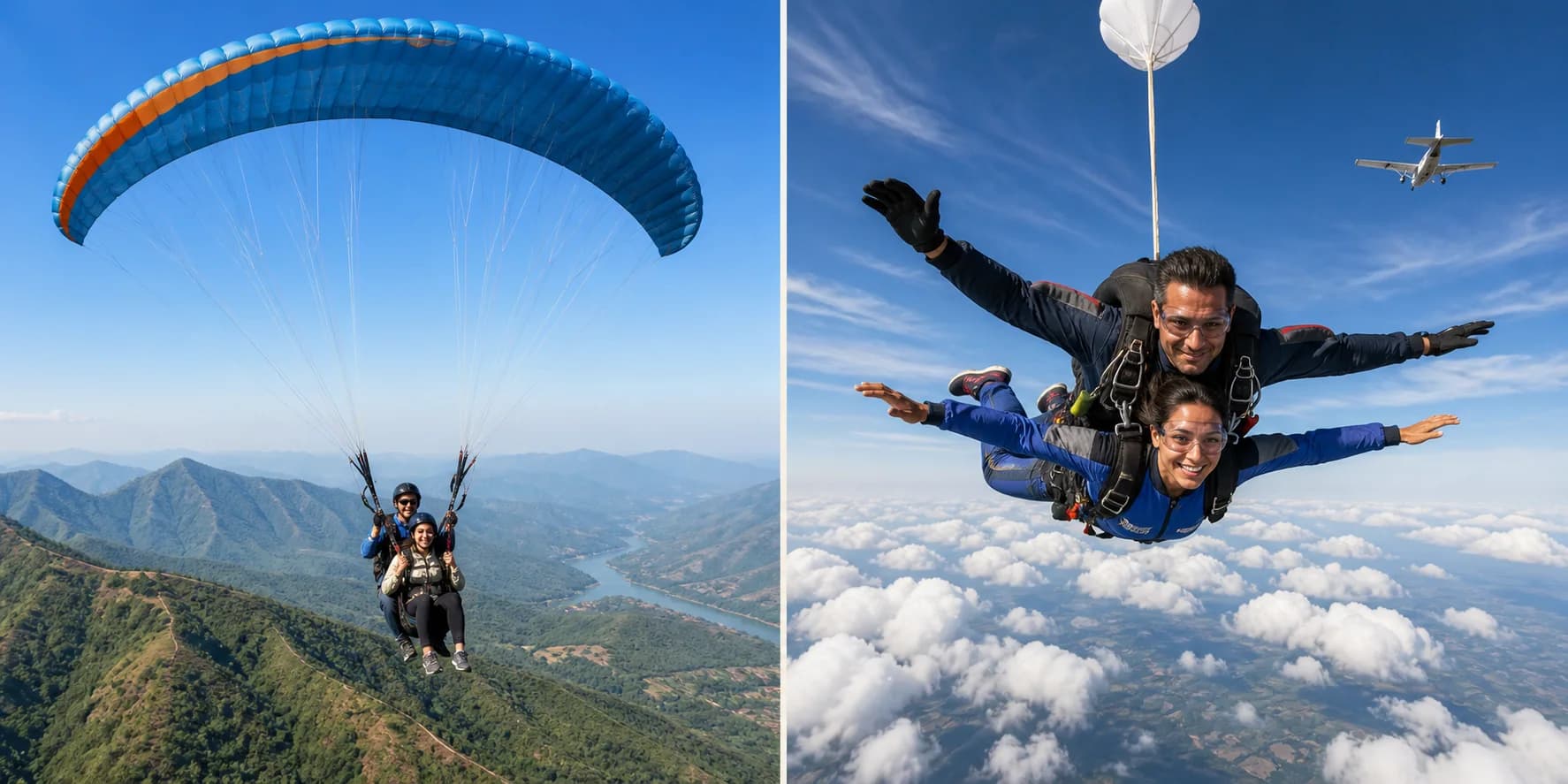
Paragliding begins with an already inflated wing and transitions from a slope into sustained flight. Skydiving begins by exiting an aircraft at altitude, falling freely and then deploying a parachute for descent and landing. A tandem paraglider passenger experiences takeoff, gliding and landing as one continuous flight. A tandem skydiver experiences aircraft ascent, an intense freefall phase and a canopy ride after deployment. Both involve aviation equipment and trained professionals, but their energy, procedures and sensations are very different.
People often compare the two because both use fabric canopies and can be experienced in tandem. That visual similarity should not hide the separate training systems, equipment designs and emergency procedures. Choose according to the experience you actually want rather than treating one as a cheaper substitute for the other.
Launch, height and duration
A hill paraglider launches by moving forward with the wing inflated overhead. Height above the terrain changes throughout the flight and depends on the launch, landscape and available lift. Skydivers leave a powered aircraft from a planned altitude, creating a distinct freefall before parachute deployment. Exact heights should be confirmed with each operator and should never be invented from generic marketing, since aircraft, airspace, site and package affect the operation.
Paragliding airtime is influenced by wind and lift, so published duration is approximate. Skydiving packages separate aircraft ascent, freefall and canopy time. Comparing only total minutes can be misleading: a short freefall is highly intense, while a longer paraglider flight may feel calm and exploratory. Ask how the complete activity is structured, including check-in, waiting, briefing and return.
What each experience feels like
Classic tandem paragliding often feels like a smooth chair in moving air. There is no aircraft exit and normally no freefall sensation. Passengers can look across the landscape, speak with the pilot and request a gentle flight. Thermic or acro conditions can create stronger movement, but those are not required for a first experience. The launch run is usually the moment that demands the most active passenger participation.
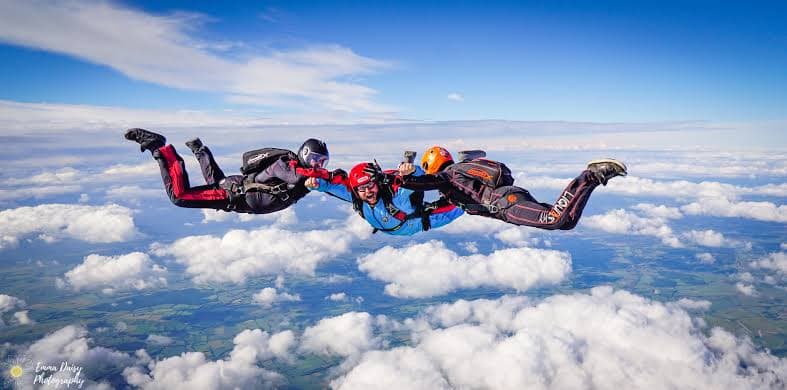
Skydiving deliberately includes rapid acceleration and strong airflow during freefall, followed by a noticeable transition when the parachute opens. For many people, that intense sequence is the main attraction. Others prefer the quieter, slower perspective of paragliding. Fear of heights does not predict the same reaction in every person, so discuss anxiety, motion sensitivity and expectations with the operator.
Training and passenger responsibility
A first tandem in either sport requires a briefing rather than a complete pilot course. In paragliding, the passenger learns launch movement, seating position and landing commands. In skydiving, the participant learns aircraft-exit posture, freefall position, communication and landing position according to the operator's system. Follow the live professional briefing instead of relying on online videos.
Learning to pilot either discipline is a separate commitment. Paragliding students build ground handling, theory and supervised flights progressively. Skydiving students learn aircraft procedures, freefall stability, canopy control and emergency actions within their training framework. A tandem experience can inform interest but does not grant independent competence.
Cost and availability
Skydiving usually requires an aircraft, fuel, airfield operation and specialised tandem system, while hill paragliding relies on suitable terrain, surface transport and natural air. Those differences influence price, but current quotes vary by region and package. Compare inclusions such as media, taxes, insurance-related terms and rescheduling. Do not publish or trust a universal price without checking the operator and date.
Kamshet is known for paragliding rather than aircraft-based skydiving. Travellers near Pune, Mumbai and Lonavala can reach tandem paragliding without travelling to a skydiving airfield. Availability remains weather dependent. A reserved date does not guarantee that wind, visibility or site conditions will permit launch.
Safety and choosing responsibly
Neither activity is risk free. Their risk controls are different and should be evaluated within the correct discipline. Ask about professional credentials, equipment maintenance, passenger limits, weather decisions, emergency procedures and recent operating experience. Provide accurate health, age and weight information. Never hide a medical concern simply to meet a booking requirement.
Choose paragliding for non-powered soaring, landscape views and a hill launch. Choose skydiving for aircraft exit and freefall. If you want a first adventure near Pune or Mumbai, classic tandem paragliding in Kamshet is the locally relevant option. If you specifically want freefall, travel to a legitimate skydiving operation rather than expecting a paraglider to recreate it. Clear expectations are an important part of safe consent. Review the cancellation, media and passenger policies of the selected provider before making any payment.
Still have safety questions?
Safety is mostly about operator discipline - read how classic tandems are run, browse the FAQs, or ask us directly on contact. When you are ready, joyrides lists current formats.
Real moments
A closer look at the experience