Paragliding Mantra · Kamshet
Winter Paragliding in Kamshet
December to February — the smoothest air of the year, and the slots that fill fastest. Book early.
Book / Enquire NowWhy winter is Kamshet's best flying season
December to February is when Kamshet flies its smoothest. Cold mornings mean stable air, gentle ridge lift replaces aggressive thermals, and the post-monsoon landscape is still green against clear winter skies. It's the window pilots themselves choose for their most relaxed flying.
For tandem passengers specifically, winter delivers the ideal first-flight conditions: less turbulence, longer comfortable airtime, and predictable mornings and evenings. If 'is it scary' is part of your hesitation, winter is the season that most gently introduces you to the sport.
For students doing courses, winter is when progression happens fastest — consistent flyable days mean more solo flights per week, and cold-air mornings give beginners the forgiving air they need while learning to control the wing.
The trade-off for all this perfection is the only honest one: everyone knows winter is best, which means December and January weekends fill weeks ahead. The season rewards early booking more than any other window in the year.
What December–February actually feels like in the air
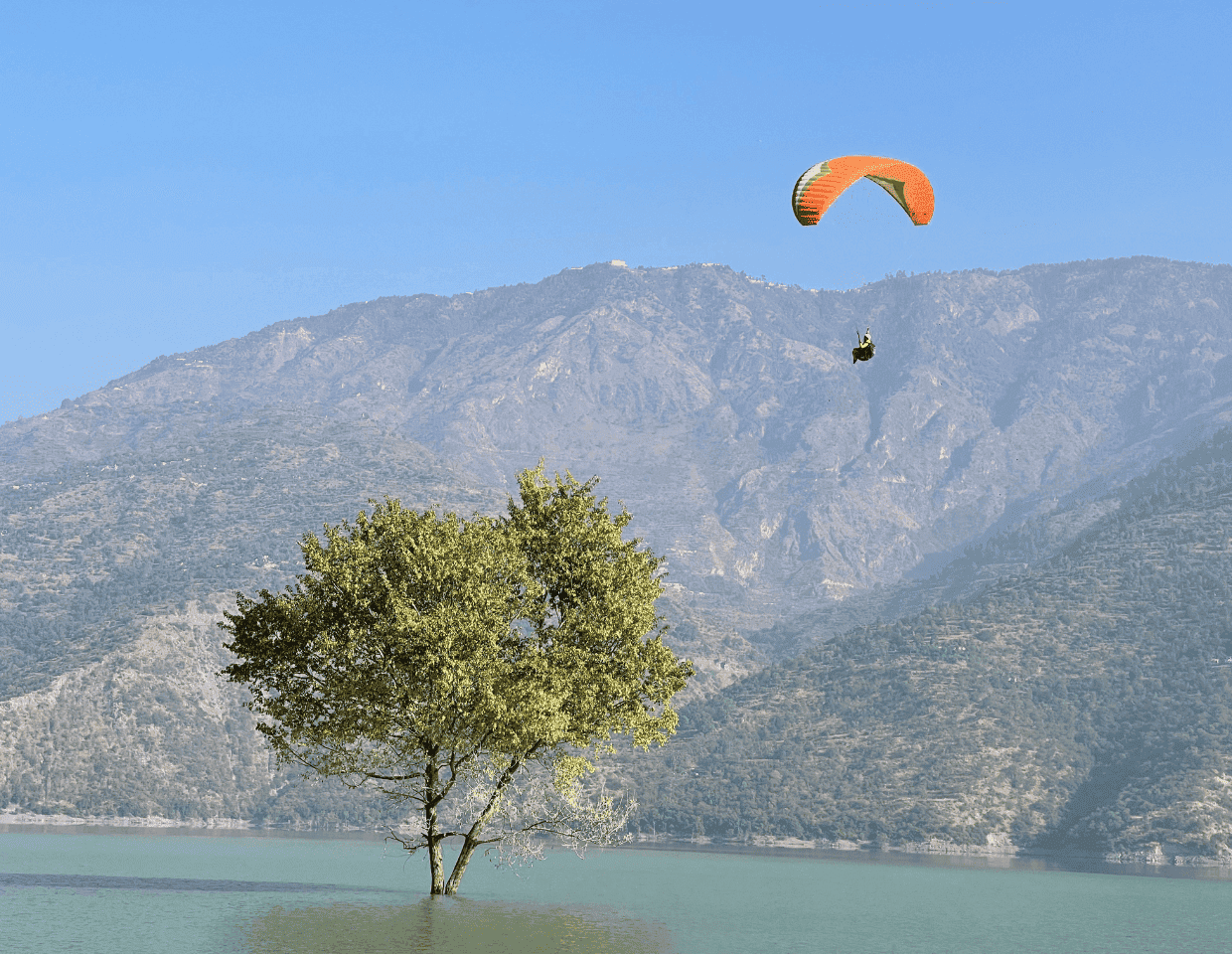
The sensation surprises first-timers: it's not a roller-coaster. Ridge soaring in smooth winter air feels closer to floating than falling — the wing holds altitude, the lift is gentle, and you genuinely have time to look around. The Pawna basin, the fort silhouettes, the whole Sahyadri ridgeline: winter visibility is when it all shows up at once.
Temperature-wise it's cool at launch altitude but not cold in any meaningful way — a light jacket or hoodie is the usual answer. The flight is 8–15 minutes; you're back on the ground before cold becomes a factor. Mornings are cooler than afternoons, obviously.
The golden-hour effect is strongest in winter. Late-afternoon flights in December and January get the long shadows, the warm light on the water, and the calmest air of the day — the sunset slot is the premium experience and it's priced accordingly only in that it's most in-demand.
For photographers and people who care about the video they take home: winter light is when the GoPro footage actually matches what your eyes saw. Haze is minimal, the lake is full, and everything reads on camera.
Booking winter slots — the realistic version
December and January are the peak months. Weekend slots at the prime morning/evening windows typically book out one to two weeks ahead, and around Christmas/New Year that stretches further. If your dates are fixed, book early; if you're flexible, weekday winter slots are dramatically easier.
Christmas and New Year are their own beast — the highest-demand dates of the season, with groups and families all competing for the same calm-air windows. For holiday dates, book at least 2–3 weeks ahead, and have a backup date in mind if your first choice is gone.
Morning slots are your best shot at a seat: they open earliest, conditions are most reliable, and they're slightly less crowded than evenings. If your schedule allows the 7–9 am window, that's where availability lives longest.
If weather cancels on you — which happens even in winter, though less often — the reschedule path is simple: the next workable slot, which in a busy season might be a few days out rather than next morning. Booking early in the month rather than late protects against this.
What to wear and bring in winter
Clothing: layers, not bulk. A t-shirt plus light jacket works; heavy woollens are overkill. Long pants — trackpants, jeans, leggings — and closed sports shoes are non-negotiable. Sandals and heels get you turned away at the field, so dress for a light outdoor activity.
Accessories: sunglasses (it gets bright up there), a light scarf or band if you're flying early morning, and nothing loose that flaps dramatically — scarves get stowed for launch. Long hair tied back.
What to leave behind: phones stay in pockets during the flight (or with ground crew), anything valuable stays in the car or the bag, and heavy jackets get left at the meeting point if the day warms up. The harness has room for a phone and keys at most.
For courses in winter: the same clothing applies for training slope days, plus the obvious point that you'll be outside all day — bring more layers than the tandem passenger needs, plus sun protection since winter sun at altitude still burns.
→ Tandem flight types→ Season & weather guide→ Book a winter slot
Frequently Asked Questions
December–January weekends need 1–2 weeks' lead; New Year dates need 3+.
Practical guides from our Kamshet team
Related reading
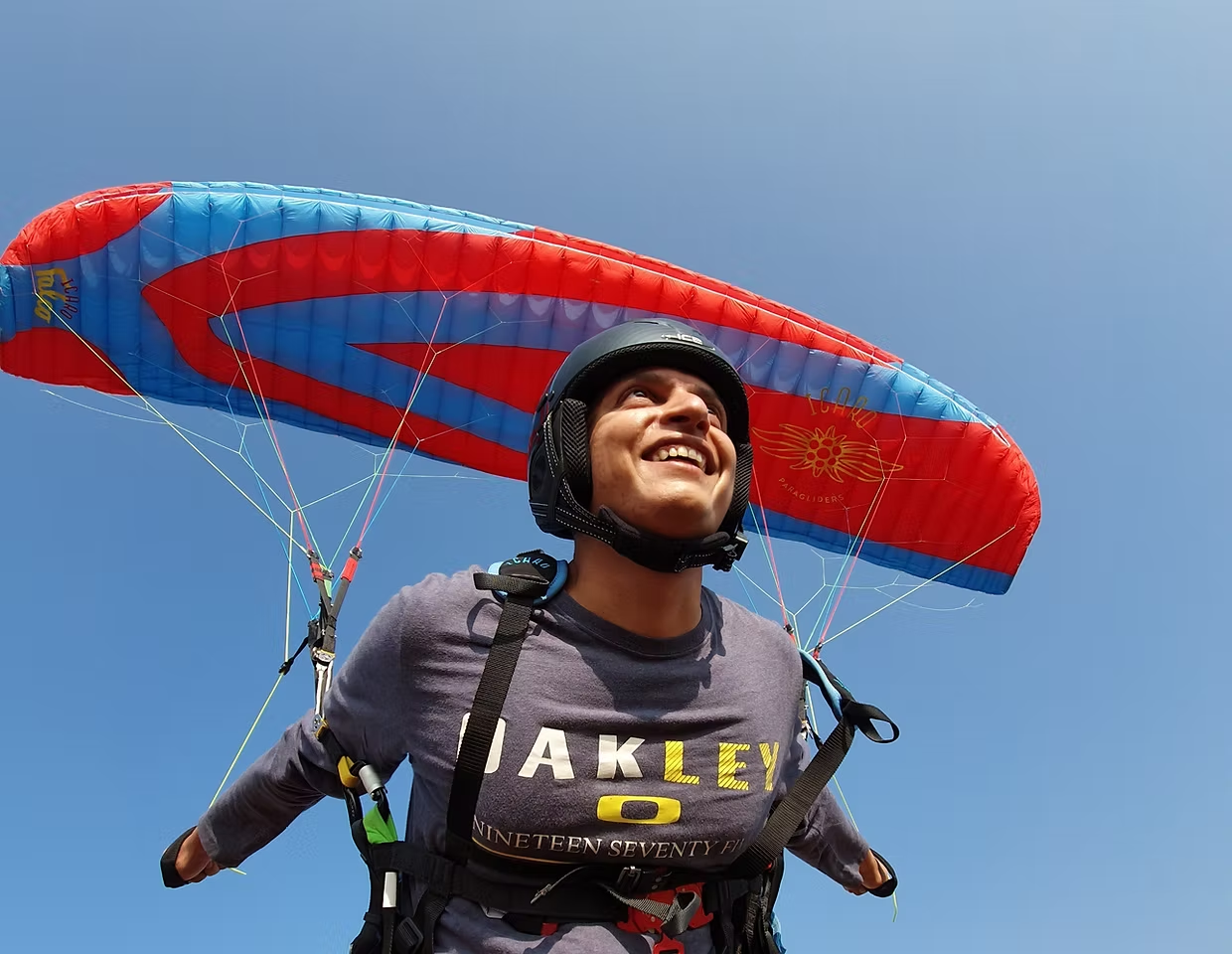
Paragliding in Kamshet Cost: Packages, Duration and Inclusions
Understand Kamshet paragliding costs, flight duration, package inclusions, optional video charges and the questions to ask before booking.
Acro Tandem Paragliding in Kamshet: Thrills, Safety & Who It's For
Acro tandem paragliding in Kamshet explained - what the manoeuvres feel like, who should try them, safety requirements and how it differs from a classic tandem flight.
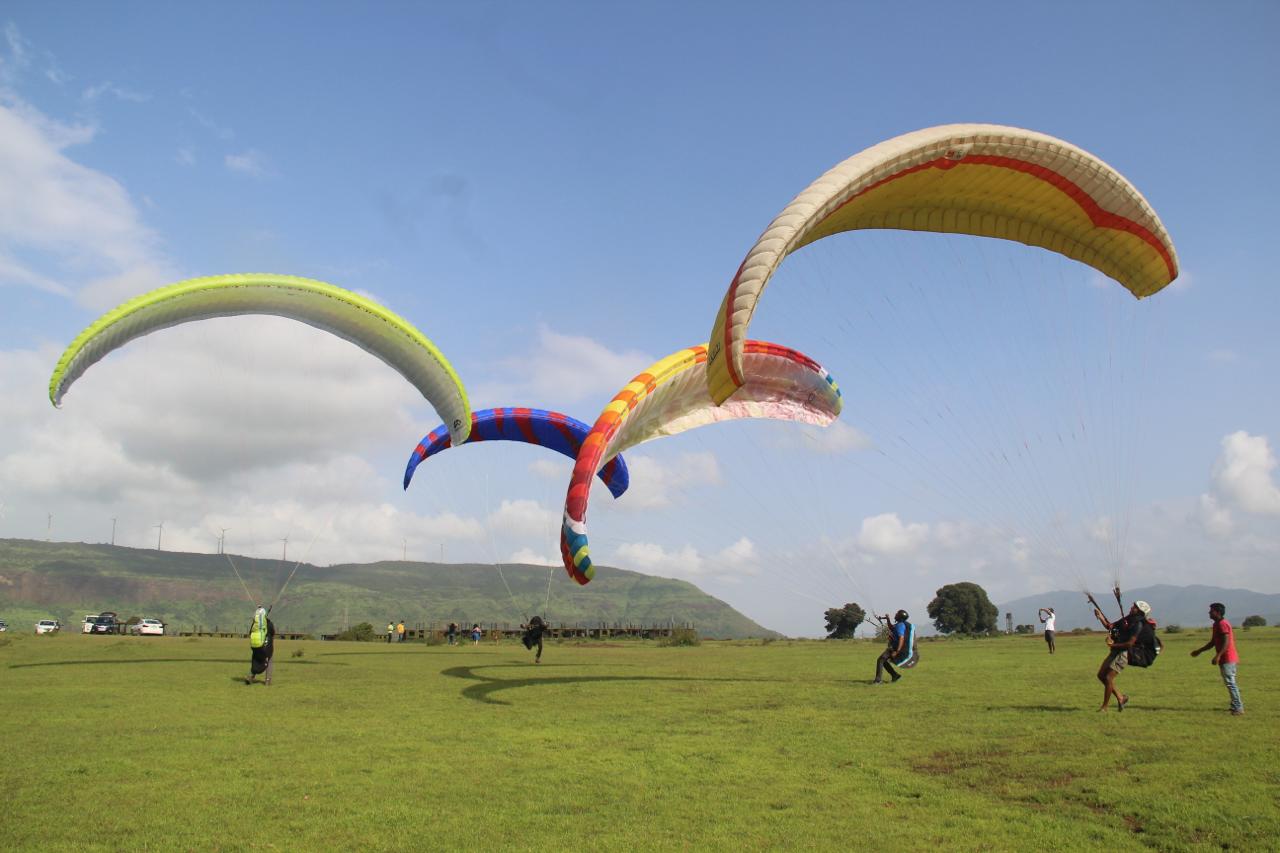
Why Weather Can Cancel a Paragliding Flight: A Safety Guide
Understand how wind, gusts, rain, clouds, visibility and thermals affect paragliding—and what to expect when a Kamshet booking is delayed.