Paragliding Mantra · Kamshet
Beginner Paragliding Course in Kamshet
From ground handling to your first solo flight in 3–4 days — at the same training slopes where Indian paragliding began.
Beginner paragliding course in Kamshet — quick answer
- Duration
- 3–4 days (P1) · 7–8 days (P1+P2)
- Price
- ₹15,000–₹18,000 all-inclusive
- Certification
- APPI 1 Discover (internationally valid)
- Format
- Residential batch or split weekends
- Experience needed
- None — designed for absolute beginners
- Age / weight
- 16+ (younger with consent), ~40–95 kg
- Location
- Kamshet training slope & ridge sites
- From Pune / Mumbai
- ≈1 hr / ≈2 hrs via expressway
Why Kamshet is where India learns to fly
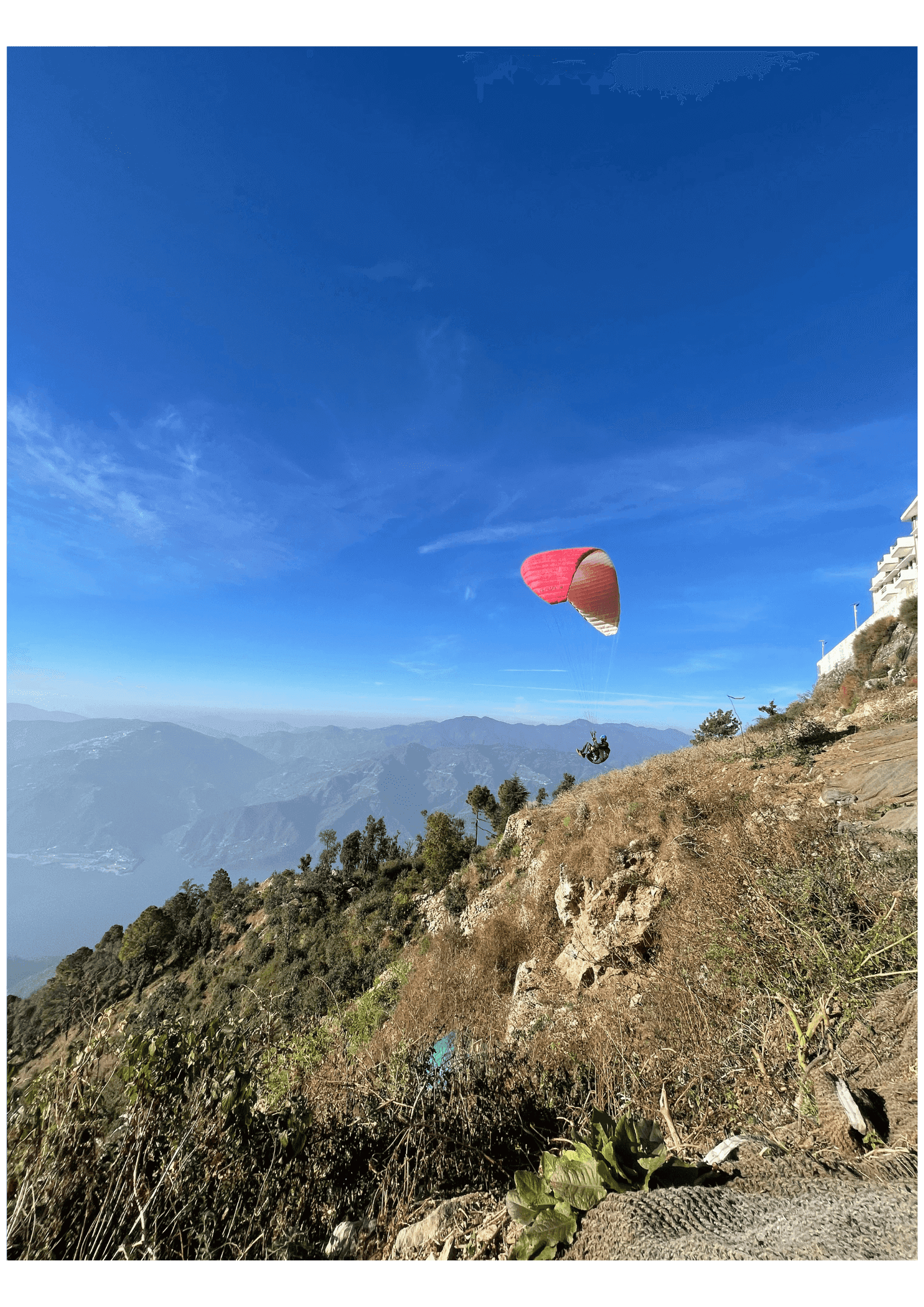
If you're searching for a beginner paragliding course in Kamshet, you've already found the right place — this village is quite literally where paragliding training in India began. The combination is unique: gentle training slopes for first launches, consistent westerly winds from October to May, and wide open landing fields where mistakes are survivable.
Kamshet's geography does the teaching for you. The training hill has a soft grassy slope that forgives imperfect launches, the ridge sites provide your first real soaring flights, and the Pawna Lake basin below gives you a landmark-rich, easy-to-navigate flying area. It's why APPI schools have operated here for decades.
Paragliding Mantra is a licensed APPI school (License No. 9) — meaning your training follows an internationally recognized syllabus and your certification is valid at flying sites worldwide. You're not learning a hobby version of the sport; you're earning the same rating pilots use in Europe, Nepal and beyond.
Location-wise it couldn't be easier: Kamshet is roughly 55–60 km from Pune and 100 km from Mumbai via the expressway, with a railway station on the Pune–Lonavala local line. Weekend modules and residential batches both work — many students from Pune and Mumbai complete P1 across two weekends.
What a beginner course actually covers
A beginner course — called P1 in the Indian system or APPI 1 Discover internationally — is 3–4 days of structured training that takes you from never having touched a wing to your first supervised solo flight. It's not a joyride with homework; it's real pilot training compressed into a weekend-friendly format.
Everything is equipment-included and instructor-supervised. You train on our certified school wings, helmet and harness provided, and every solo flight is guided by radio from an instructor watching your entire approach.
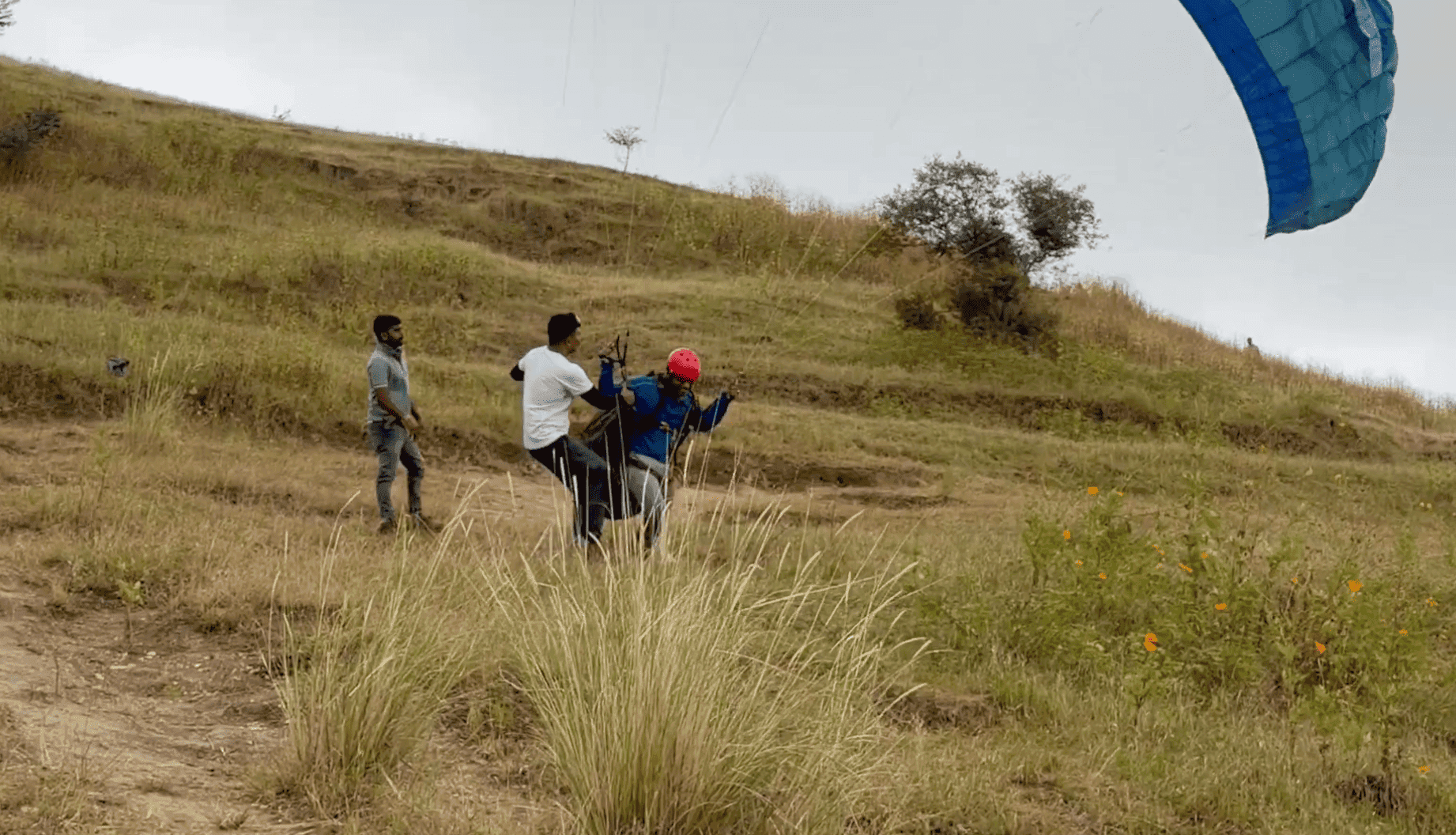
- Ground handling — inflating, controlling and kiting the wing until it obeys you (this is most of day one and the skill everything else builds on)
- Launch and landing technique — posture, takeoff runs, flare timing, safe rollouts
- Bunny hops — short low flights from the training slope to build muscle memory
- First solo flights — higher flights from the ridge with full radio guidance
- Theory — wind reading, site assessment, airspace basics, and emergency procedures
Day by day — what the course looks like
Day one is ground school: you learn the wing, the harness, and how to inflate and control the canopy on flat ground. It looks deceptively simple and is genuinely tiring — by afternoon you'll understand why instructors call ground handling 80% of safe flying. If conditions allow, you end the day with your first bunny hops.
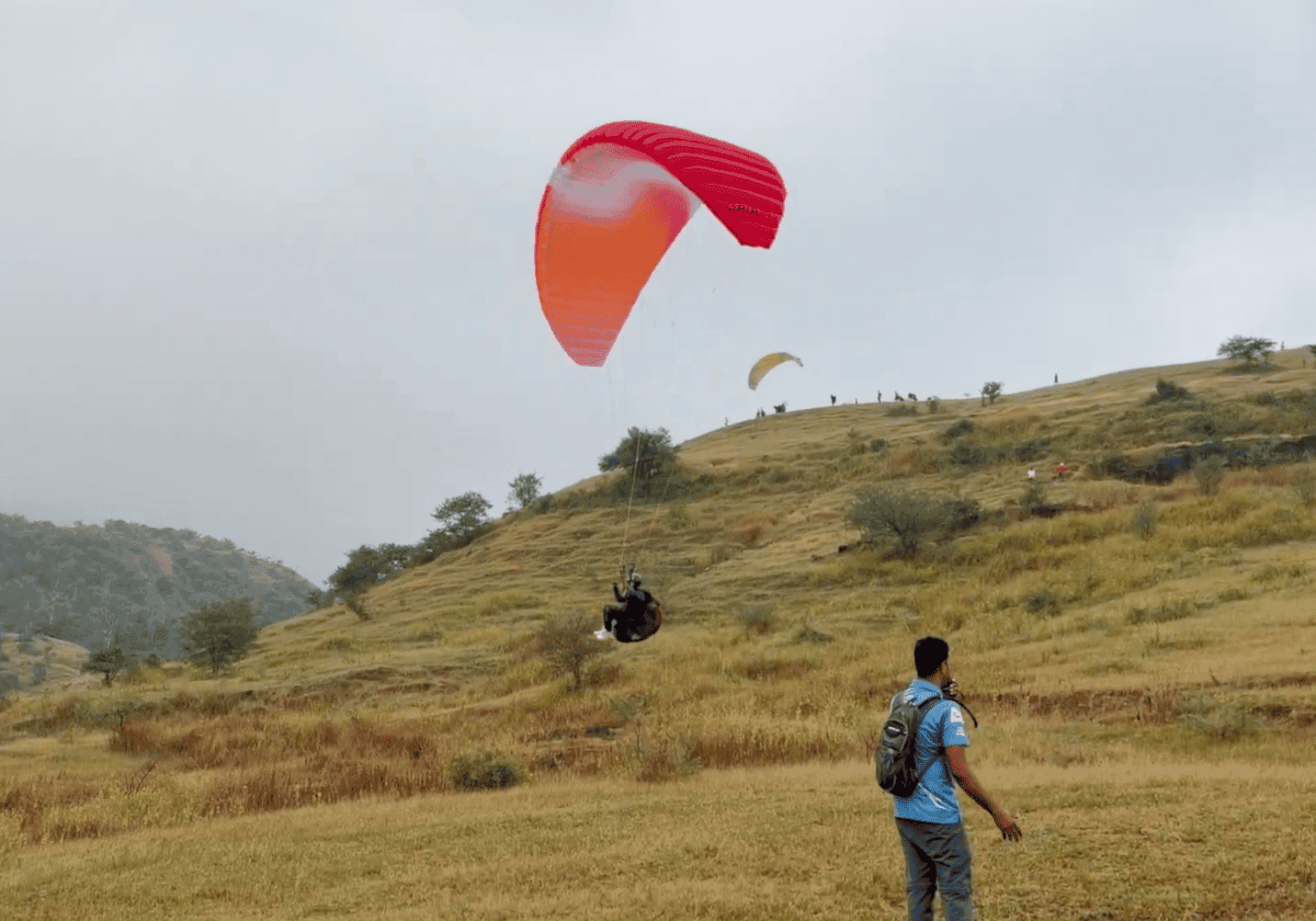
Days two and three move up the slope: longer ground-handling drills, then progressively higher launches, each supervised and debriefed. By the final day you're doing your first proper solo flights from the ridge — takeoff, a clean glide with turns, and a radio-talked landing in the main field.
Mornings are flying hours — wind is calmest and safest before 11 am — with theory and debriefs in the midday heat. If you're doing the residential format, evenings are for gear familiarization, video review of your flights, and the kind of pilot conversations that teach as much as the syllabus.
Who teaches you — and why the school matters
Your instructors are senior pilots holding APPI and FAI sport licenses, led by Tanaji (TJ) — one of India's longest-flying paragliding instructors, flying since 1997. Small batch sizes mean your launches, flights and debriefs are personal rather than assembly-line.
The school piece matters more than it sounds. A licensed APPI school (License No. 9) means your rating is logged in the international APPI system — not a certificate printed locally that no site abroad recognizes. It's the difference between a course and a credential.
Safety infrastructure runs in the background of every training day: gear checks before each flight, an on-site safety officer, EFR/first-aid certified staff, and a partnered hospital with 24/7 ambulance support. You notice it as calm, unhurried professionalism — never as drama.
Cost, and what comes after P1
A beginner P1 course in Kamshet typically runs ₹15,000–₹18,000 — that's all equipment, instruction, radio supervision and certification paperwork included. Compared to tandem joyrides at ₹3,000 each, a course is the better value the moment you know you want to fly more than once.
P1 certifies you to fly supervised — under instructor radio guidance at known sites. The natural next step is P2/APPI 2, which adds meteorology, more solo flights and the skills for unsupervised flying at rated sites. Most committed students plan P1+P2 together over 7–8 days.
Beyond that, the pathway continues through P3 (independent pilot), P4 (advanced), and specializations like SIV, thermalling and cross-country — all available at Kamshet. Some students stop happily at P1 for the occasional supervised holiday flight; others keep going toward APPI professional ratings.
P1 course details & syllabus →P2 progression course →P1+P2 combined →All APPI courses →Course pricing →
Weekend or residential — how to fit it in
Two formats work for most people. The weekend split — two consecutive weekends — suits Pune and Mumbai students who can't take leave. The residential batch — 3–4 consecutive days — suits anyone travelling in or who wants the immersion of living next to the training site.
Staying overnight isn't luxury; it's practical. Training runs early mornings on the slope, and commuting back and forth eats energy and airtime. Lakeside accommodation near Pawna runs ₹1,500–₹3,000 per person per night with meals — our partner stay is about 15 minutes from the launch sites.
Weather is the honest variable: training shifts with wind windows, and a good school reschedules rather than rushes. A P1 completed in 4 calm days beats a P1 rushed through 3 marginal ones — we plan batches around the forecast, not the other way round.
Not sure yet? Try an instructional tandem first
If you're not ready to commit to a full course yet, an instructional tandem is the honest test: 15–25 minutes where the pilot lets you feel the controls and you find out whether flying grips you. Most of our P1 students started exactly that way — they came for a joyride and left asking about batch dates.
Either way, the path is the same: tell us your dates and we'll match you to the next batch. If the season isn't right, we'll say so and hold your spot for when it is.
Beginner Paragliding Course — FAQs
Weekend batches fill first — ask about the next P1 batch dates early.
Practical guides from our Kamshet team
Related reading
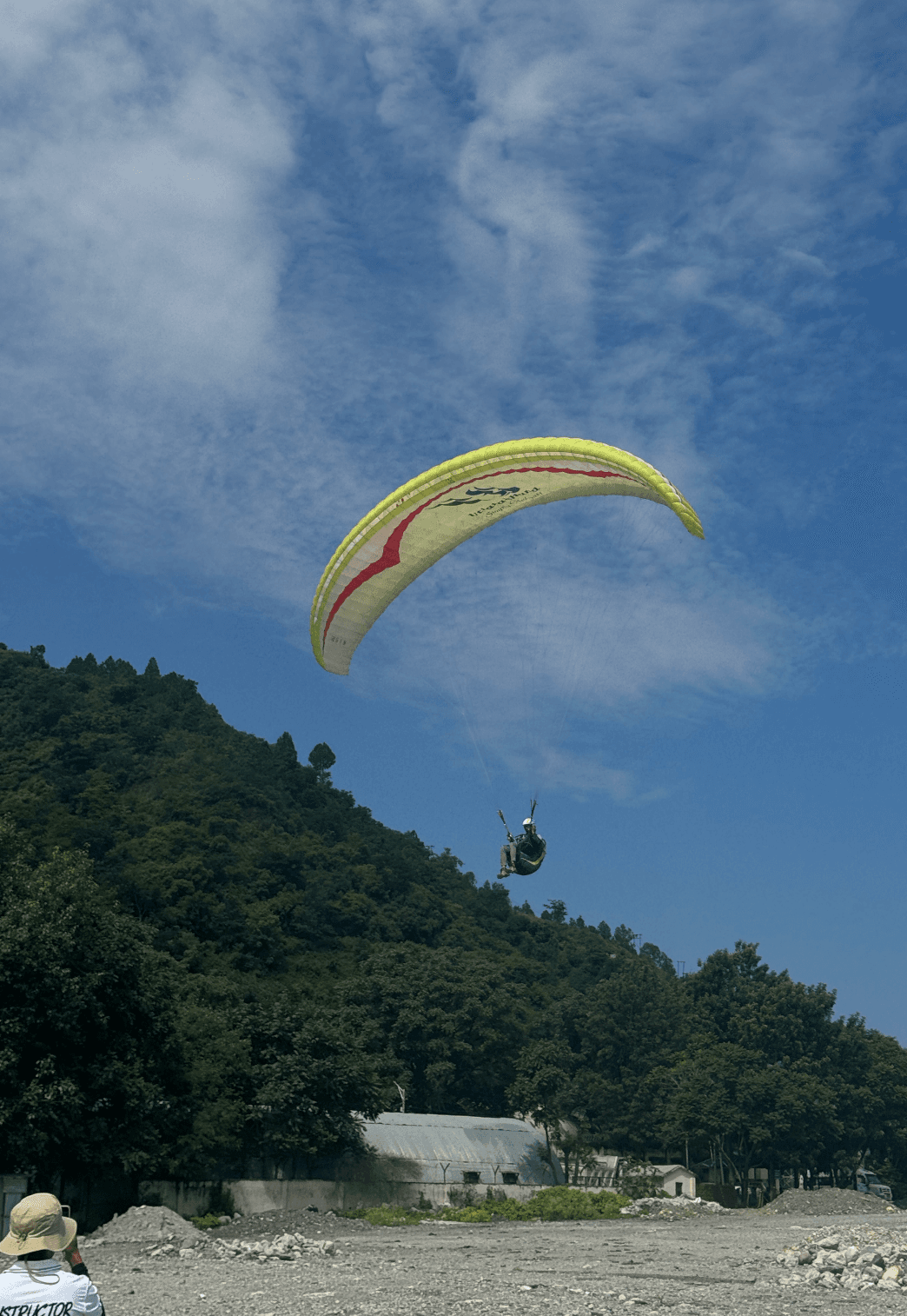
P1, P2, P3 and P4 Paragliding Course Levels Explained
Compare P1 through P4 paragliding course stages, typical skills, supervision, progression and questions to ask a training school in India.
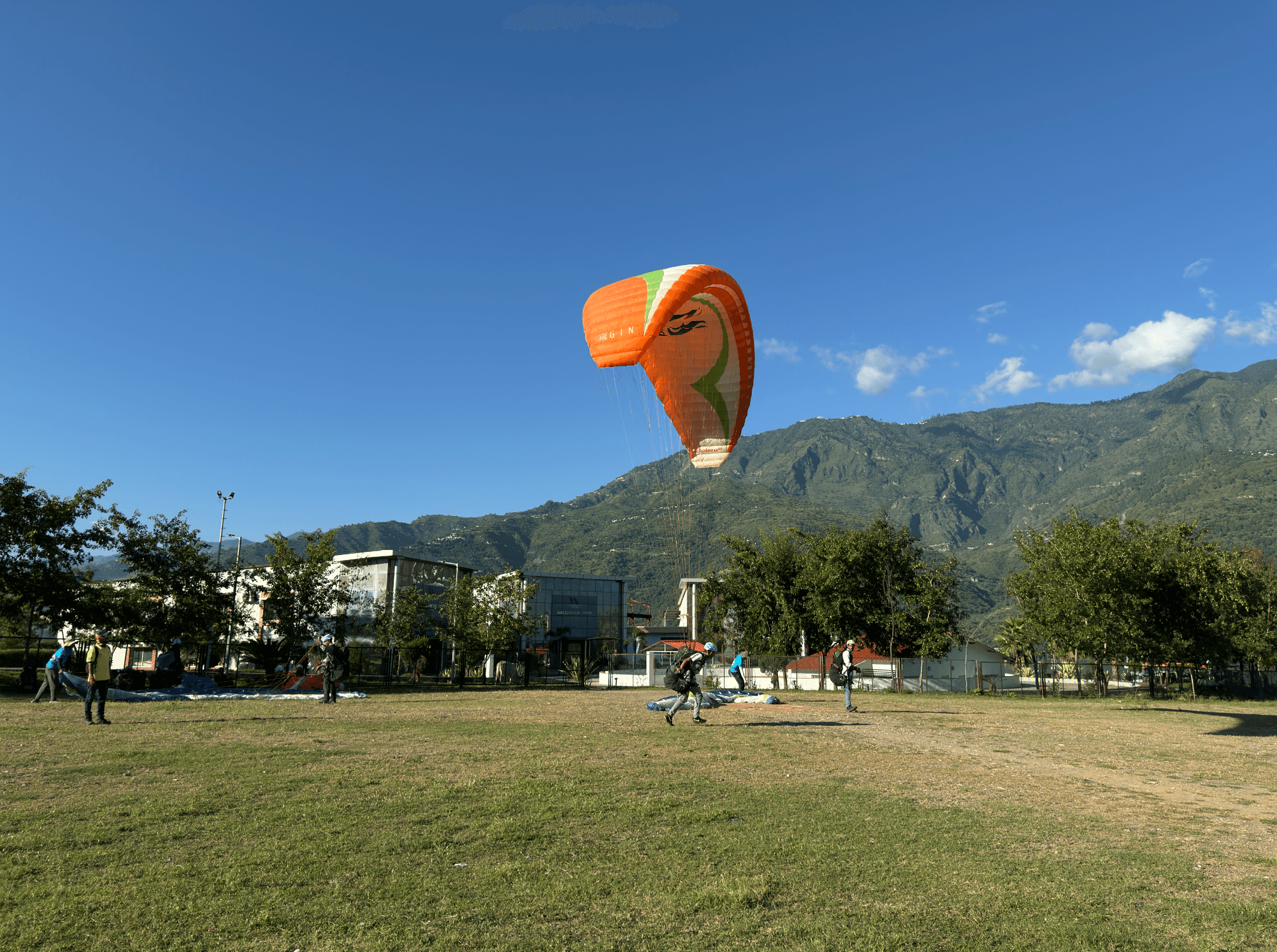
How to Learn Paragliding in India: Beginner Pilot Roadmap
A realistic beginner roadmap for learning paragliding in India, from school selection and ground handling to supervised solos and independent progression.
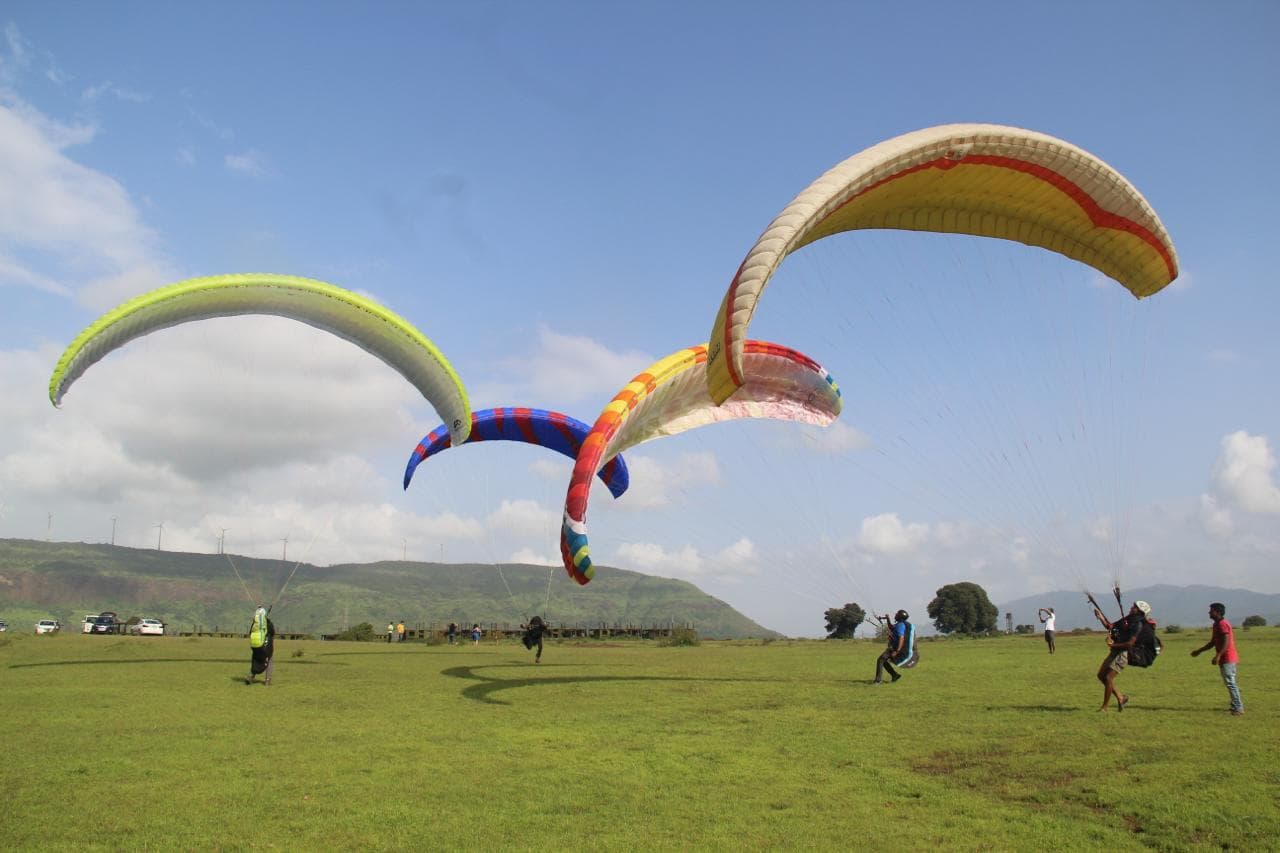
Why Weather Can Cancel a Paragliding Flight: A Safety Guide
Understand how wind, gusts, rain, clouds, visibility and thermals affect paragliding—and what to expect when a Kamshet booking is delayed.