The short version
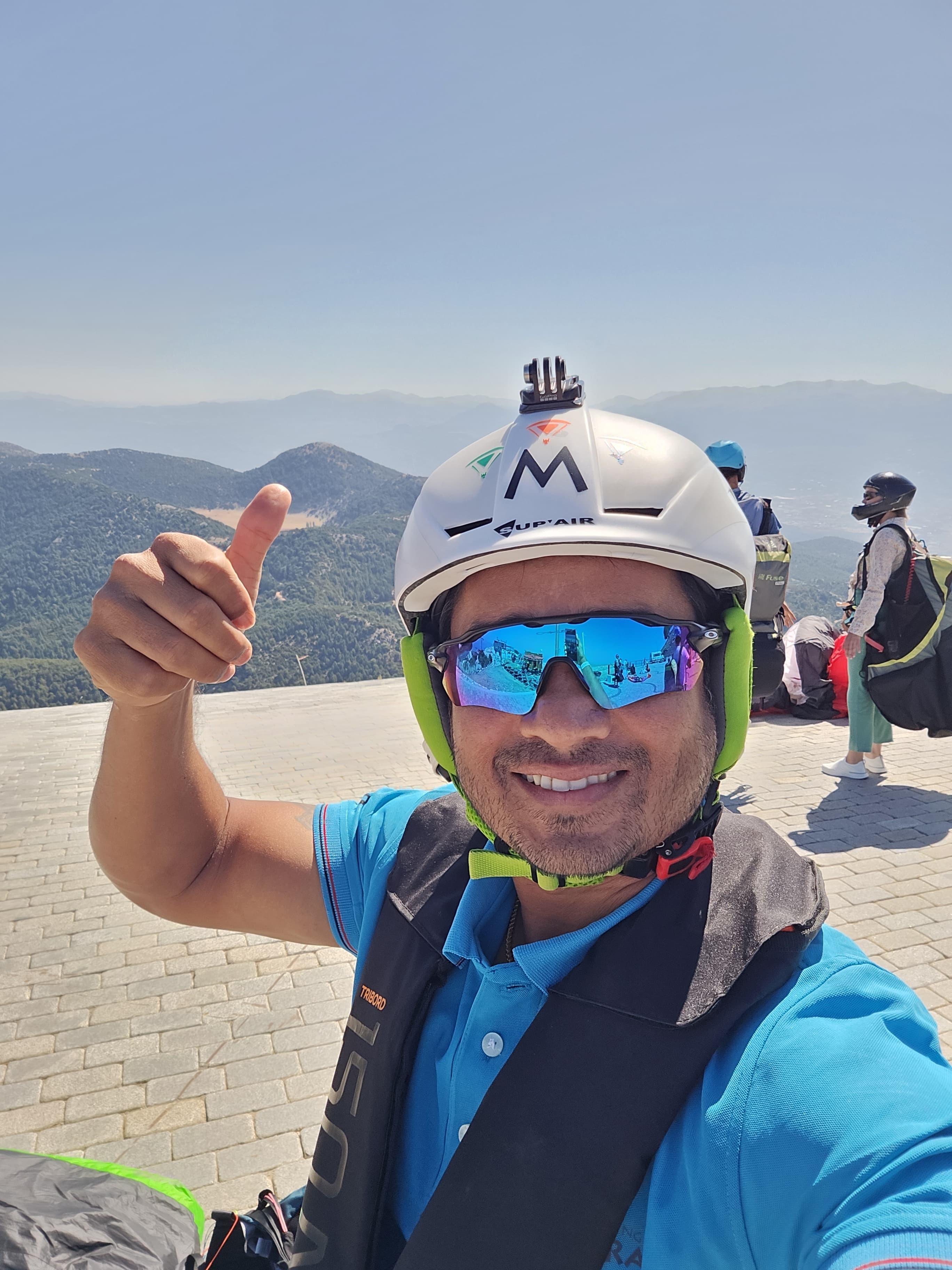
Learn how to paraglide with practical tips from TJ, India's first infinity tumbling pilot and Paragliding Mantra's chief flying instructor at Kamshet.
What paragliding actually is
Paragliding is free flight — a lightweight fabric wing, a harness, and nothing else between you and the sky. There is no engine and no rigid frame; the wing inflates with moving air and the pilot steers it with two brake toggles. It is closer to how a bird flies than to anything mechanical, and that simplicity is exactly why it feels so pure.
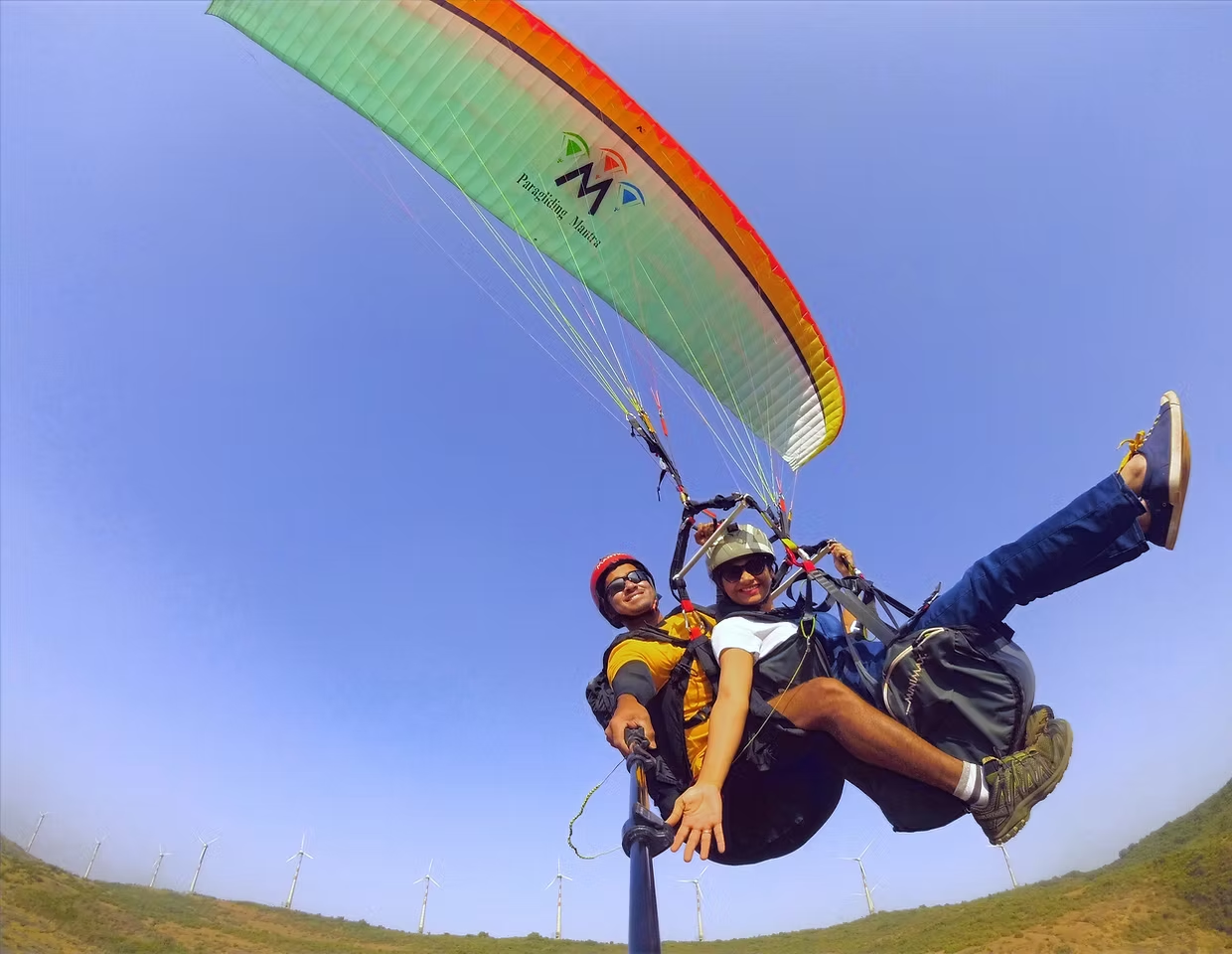
It is also one of the most accessible airsports in the world. You can experience it as a passenger in a tandem joyride with a certified pilot on your first day, or go the full route and learn to fly solo through a structured course. Both paths start on the same hills at Kamshet.
Tip 1 — Start as a passenger before you start as a pilot
TJ's first advice to almost every aspiring pilot is simple: fly tandem once before you enrol. A tandem flight teaches you more about the sport in ten minutes than a week of reading — you feel how the wing launches, how smoothly a good pilot works the brakes, and how quiet the air can be when conditions are right.
If the flight thrills you rather than frightens you, you are probably a good candidate for training. If it terrifies you, better to discover that as a passenger than mid-course. The classic tandem joyride is designed exactly for this first taste.
Tip 2 — The launch is a run, not a jump
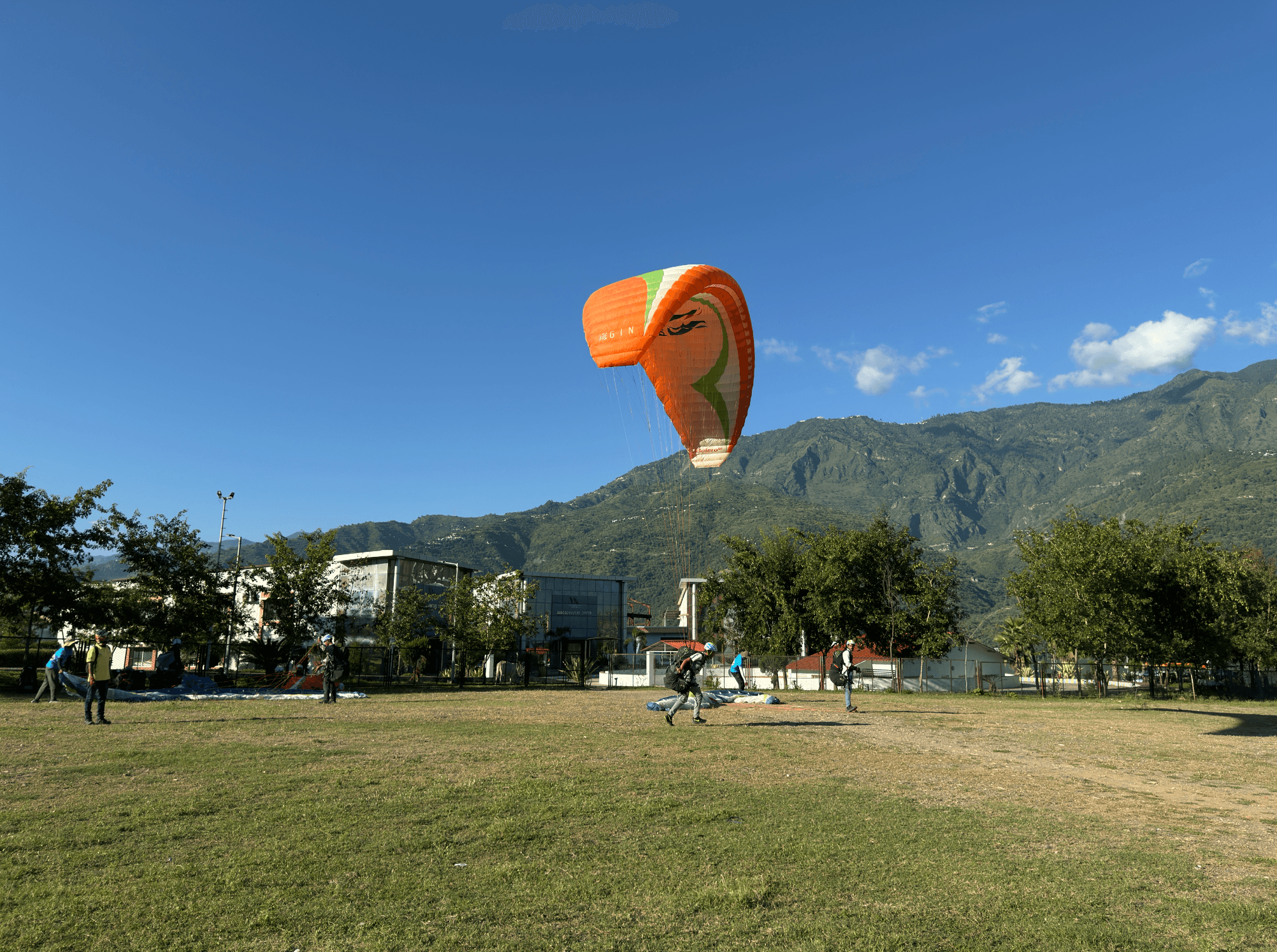
The biggest beginner misconception: you do not jump off anything. On a proper paragliding launch the wing inflates overhead, you run a few committed steps down a gentle slope, and the glider lifts you off as it starts flying. Leaping into the air or sitting early are the classic errors — both collapse the wing's lift at the worst moment.
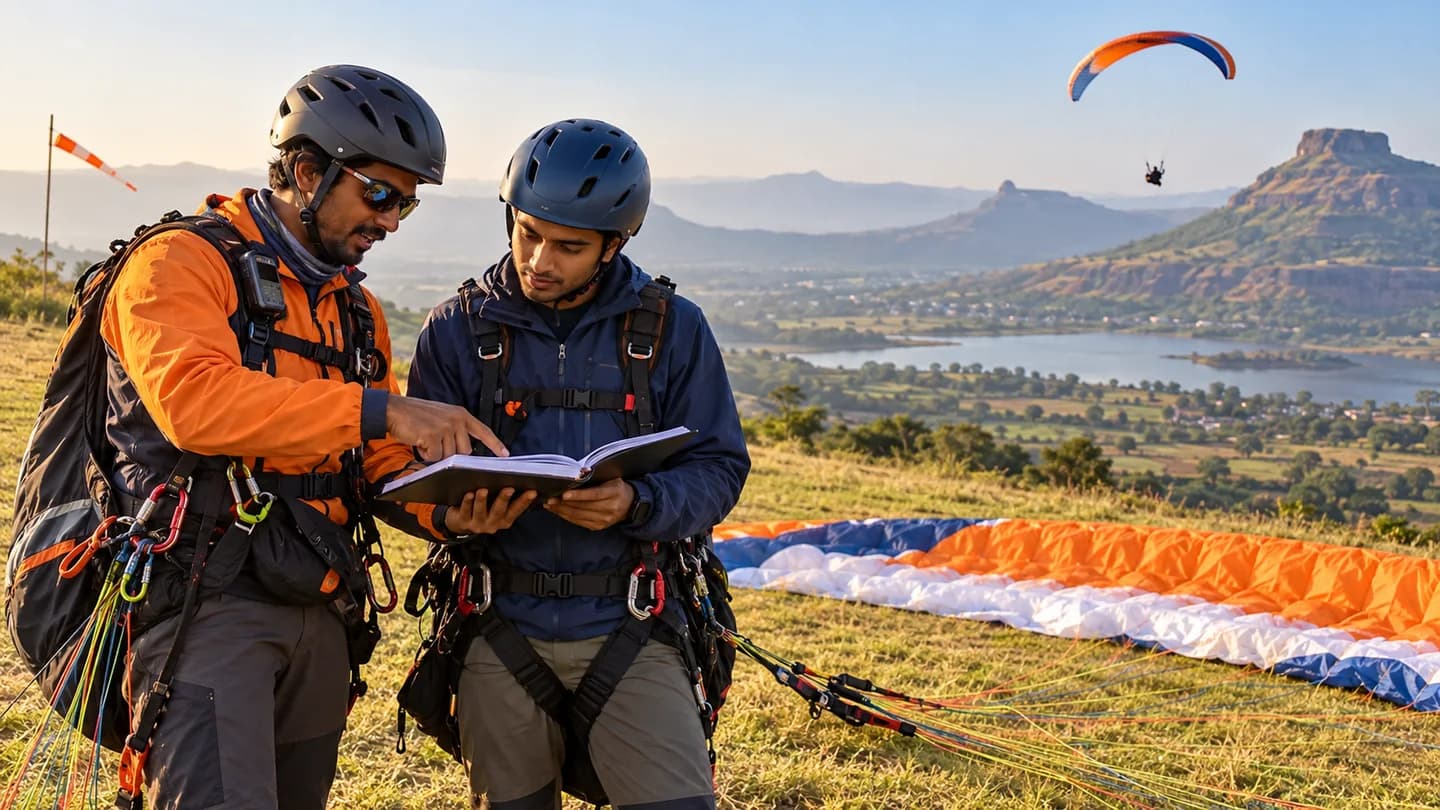
TJ drills ground handling for days before any student leaves the ground: laying the wing out correctly, inflating it evenly, feeling the brakes, and aborting cleanly. 'The launch is won or lost in your head and your first three steps,' he says — students who master the kite on flat ground take off smoothly almost every time.
Tip 3 — Respect weather more than skill
Every experienced pilot shares one habit: they would rather walk down the hill than launch into doubtful air. Wind strength, direction, gusts, cloud development and valley thermals all change through the day, and beginners should fly only in the mild windows — usually early morning and late afternoon at Kamshet.
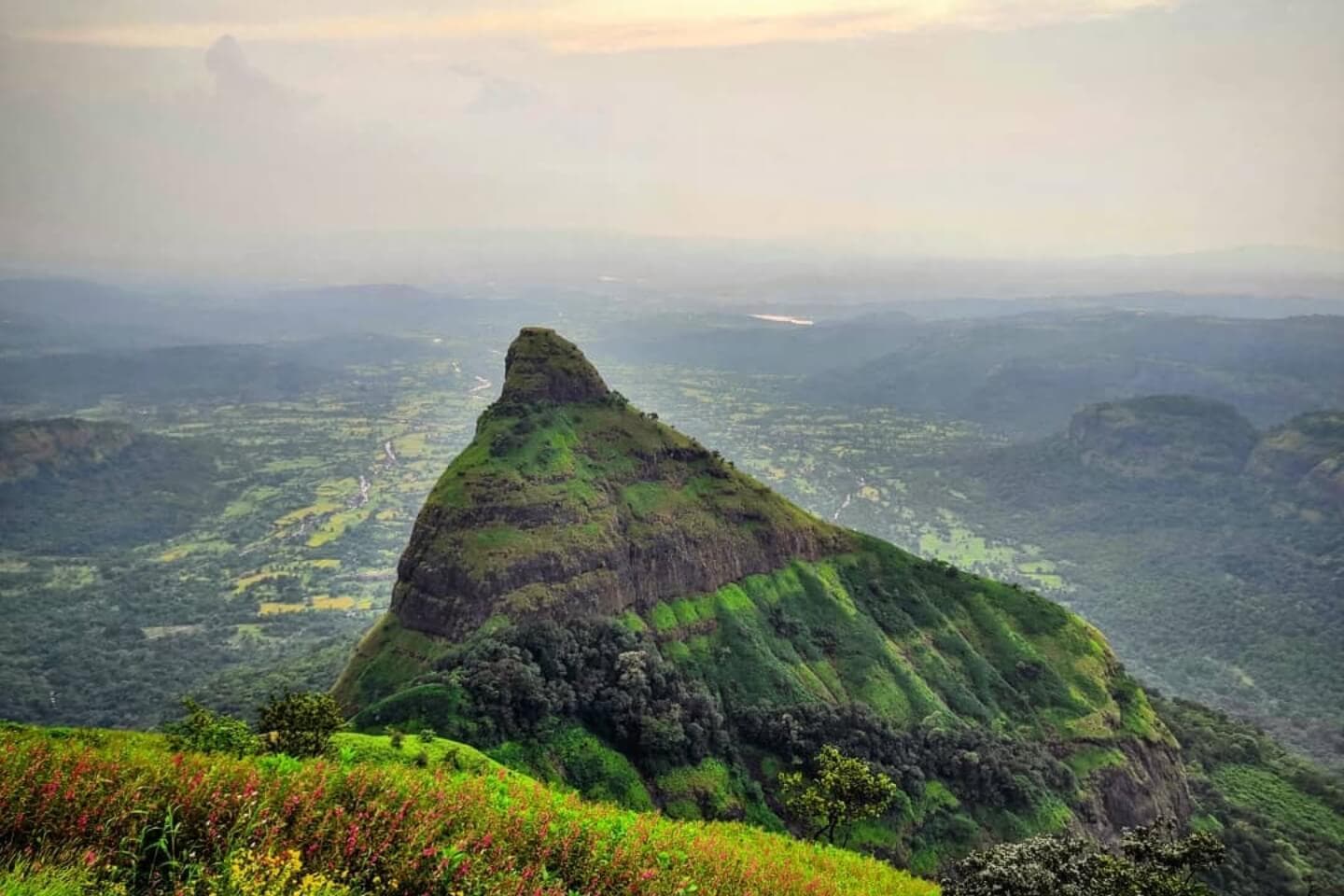
Before each day the team reads the actual conditions on the hill, not just a phone forecast. Our Kamshet paragliding weather guide explains what pilots look for — stable air, flyable wind speed, and a sensible site choice between Tower Hill and Shelar depending on season.
Tip 4 — Learn one thing perfectly before the next
Paragliding progression is deliberately layered: theory and equipment first, then hours of ground handling, then low-altitude hops on a small training hill, then higher flights, then turns, approaches and landings, and only later soaring and thermalling. Each skill compounds on the one before it.
Students who rush usually end up relearning basics at a harder stage. A good school controls that pace — at Paragliding Mantra the beginner paragliding course in Kamshet moves a student forward only when the current level is genuinely comfortable, not when a calendar says so.
Tip 5 — Your landing is planned at take-off
Ask any tandem pilot where they look first at a new site and the answer is the landing field — wind direction, obstacles, power lines and escape routes. Beginners fixate on getting airborne; pilots think about getting down, always with a plan B if the primary approach gets crowded or the wind shifts.
On landing itself the rule is legs down, eyes forward, run it out. Practice the flare and the run-out on every single flight — a clean landing is the skill that protects you on the day when everything else goes imperfectly.
Tip 6 — Fly with people better than you
Progress accelerates around good pilots. Kamshet has India's deepest pool of professional tandem and instructor pilots, and TJ built much of that community — including mentoring pilots who went on to fly with the Indian Army's team. Shared briefings, site debriefs and simply watching smooth launches teach things no manual can.
Once you hold a club-pilot level, keep flying with the community rather than alone — the Paragliding Mantra pilot community exists precisely for that post-course progression.
What equipment do you actually fly?
A paraglider is deceptively simple kit: a fabric wing made of cells that inflate with air, a webbing harness you sit in, a reserve parachute packed into that harness, and a helmet. Add a radio for instruction and, later, a variometer that beeps when you are climbing — that is the entire aircraft.
During a course and on joyrides the school supplies everything, correctly matched to your weight. Personal equipment only matters once you fly solo regularly — and choosing it is a decision to make with your instructor, not a shopping website. A wing rated for your level (an 'A' or 'B' class glider for beginners) forgives mistakes; a hot wing does not.
Forward launch vs reverse launch
There are two ways to get the wing off the ground. In a forward launch you face downhill, pull the canopy up behind you and run — simple, used in light winds. In a reverse launch you face the wing, inflate it overhead, turn and run — the standard in stronger wind because you can see and control the canopy the whole time.
Beginners spend days practising both on flat ground before touching a slope. It feels repetitive; it is also the single most valuable drill in the sport, because 90 percent of launch problems are canopy-control problems, not leg problems.
How you actually steer — brakes, weight shift, speed bar
Two brake toggles hang at your hands: pull the left to turn left, pull both together to slow or to flare for landing. Subtle inputs beat big ones — think 'inviting the wing', not steering a wheel. Weight shift inside the harness adds roll authority, and on more advanced wings a foot-operated speed bar trims the wing faster into wind.
The skill is not pulling the brakes; it is knowing when to let go. Holding deep brakes too long can stall the wing, so courses drill 'hands up' as almost a reflex. Good pilots look effortless because their corrections are small and early, never large and late.
Sled rides, soaring and thermalling — the three kinds of flight
Your first flights are sled rides: launch, glide down, land — a few minutes of pure basics. Soaring is next, where the wind deflected upward by a ridge gives the wing enough lift to stay airborne and even climb along the hill face; Kamshet's evening ridge soaring can keep a pilot up for a long time.
Thermalling — circling inside rising columns of warm air — is the gateway to cross-country flying and real height. It is also where the sport becomes a chess game of reading birds, cloud shadows and the vario's tone. Nobody thermal-flies on day three; it is a reward for the hours of foundations before it.
Safety is a curriculum, not a disclaimer
Proper training bakes safety into every stage: reserve-parachute theory, weather limits, airspace etiquette, landing-out options, and progressive exposure rather than bravado. Further on, SIV (simulated incident in flight) courses deliberately collapse the wing over water so pilots learn recoveries in a controlled setting.
The habits that matter most are boring ones: a consistent pre-flight check, an honest weather call, and the willingness to pack up when the air feels wrong. 'The sky will be there tomorrow,' is a line TJ repeats to impatient students — the flight you skip is never a failure.
A typical training day at Kamshet
Mornings start early — theory on the lawn or straight into ground-handling drills while the air is calm. By late morning students are doing low hops on the training slope: launch, straight flight, flare, land, carry the wing back up, repeat. It is physical, repetitive and quietly addictive — every repetition makes the wing less mysterious.
Afternoons shift to debriefs, video review and, as the group progresses, higher flights with instructors on the radio. Days end with the ritual that matters most: folding the wing carefully, logging the flight, and talking through what the sky taught that day.
Do you need to be fit — or brave?
Paragliding asks less of the body than people expect: a short committed run on launch, walks up a training slope, and calm hands. Ages roughly 16 to 60+ fly tandem and train solo; weight ranges apply and health issues like heart conditions should be declared honestly before the course.
Bravery matters less than temperament. The students who progress fastest are the patient ones — the sport rewards restraint, preparation and listening far more than adrenaline tolerance. Fear of heights, interestingly, often fades quickly once the wing is flying and there is no edge in sight.
Where a course can take you
The beginner rating is only the first rung. After P1 comes supervised-to-independent flying, P2 club-pilot privileges, then P3 and beyond into thermalling, cross-country, SIV and — for a handful — acro, the discipline TJ is known for. A few students each season discover they were not learning a hobby; they were starting a sport they will do for decades.
Every path after the basics runs through airtime and community — fly often, fly with better pilots, and let each season open the next door. The full APPI course pathway maps that progression level by level.
The honest answer to 'how do I start?'
One tandem flight, one honest conversation with an instructor, and a P1 course when you are ready — that is the entire roadmap. If you are anywhere near Pune or Mumbai, Kamshet is an hour or two away and the season runs October to May. See you on the hill.